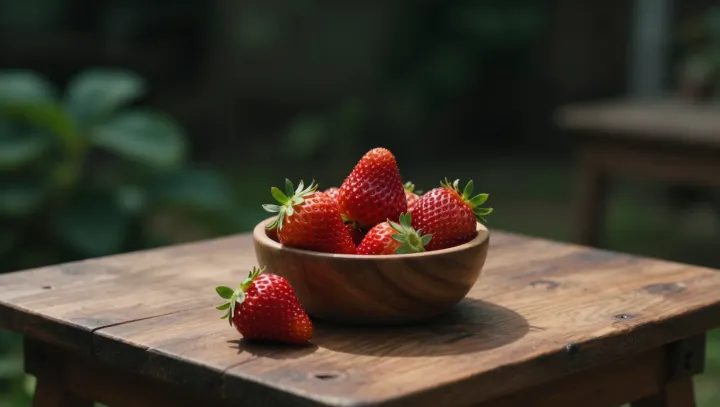
The brightest strawberry on the shelf is rarely the sweetest. Growers and food scientists point out a subtler signal of ripeness: seeds that sit slightly on the surface and an underside that already smells fragrant at room temperature. Those cues reveal where sugar concentration and volatile aroma compounds peak first inside the fruit, long before full cosmetic redness arrives.
Sweetness in strawberries depends on the balance of sucrose, fructose and organic acids, governed by basic plant physiology and enzymatic activity. As the berry ripens from the stem end downward, cell walls soften and soluble solids increase, while the achenes, the tiny seedlike structures, begin to protrude. That physical shift tracks internal changes in osmotic pressure and signals that the transport of carbohydrates into the flesh has intensified, boosting perceived sweetness.
Aroma offers a second, often more reliable indicator. The underside of a ripe strawberry emits a complex mix of esters and aldehydes, released as metabolic pathways such as glycolysis and fatty acid oxidation accelerate. Because these pathways are sensitive to temperature, a berry that smells rich even at room conditions is likely at a sensory peak. For shoppers and chefs, prioritizing seed position and underside scent over simple color can improve flavor yield from every basket.