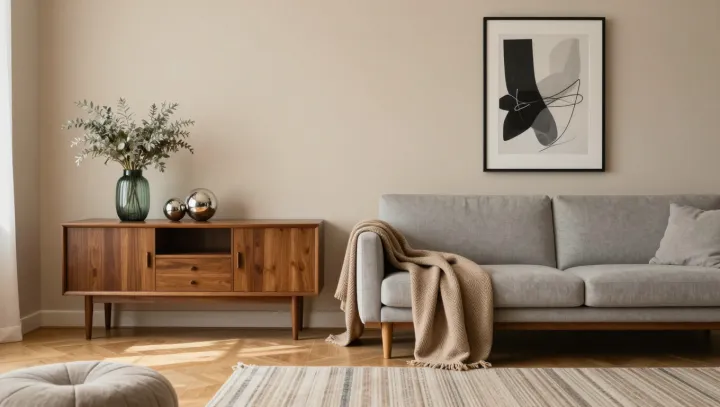
Bare walls, low furniture and neutral palettes are being misread as a cultural turn toward having less. In reality, the most shared minimalist interiors among young people are dense with concealed systems: floor‑to‑ceiling cabinets, built‑in drawers, cable channels, sliding partitions and hybrid furniture packed into tight footprints.
What looks like subtraction is closer to a reallocation of entropy. Instead of scattering objects across open surfaces, residents push them into custom millwork, under‑bed modules and integrated kitchen walls. Interior designers talk less about style and more about volumetric efficiency and spatial ergonomics, treating each cubic inch as usable capacity that must absorb daily clutter before it reaches the visible layer.
Digital habits reinforce this logic. Compact homes double as office, gym and studio, so every zone carries overlapping use cases. A dining table hides power strips and docking stations, a sofa frame stores seasonal items, a wall panel masks acoustic insulation and wiring. Minimalist imagery on social feeds becomes a user interface: the front end is calm and empty only because the back end of storage, zoning and multiuse mechanisms is running at maximum load.