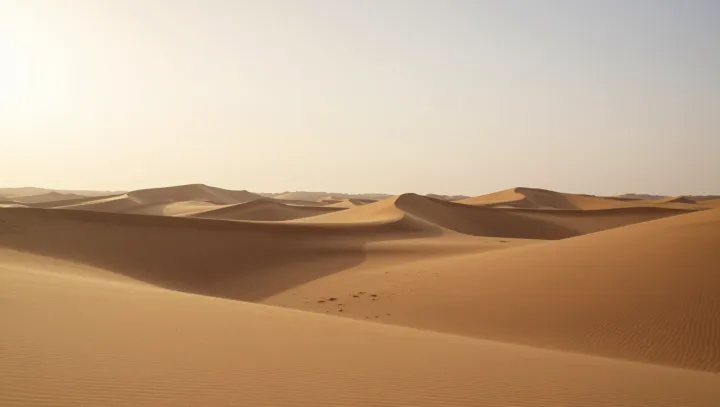
Sand and salt, not stone and steel, now act as the most reliable archive for Loulan and other lost kingdoms. In the so‑called “sea of death,” air holds almost no water vapor, surface temperatures swing but remain dry, and wind strips away organics rather than feeding them. The result is a landscape that behaves like a vast, open‑air desiccator, stabilizing what would normally rot, rust or collapse.
Archaeologists describe this as a problem of entropy and competing rates. In cities, high humidity, dense populations and rapid construction cycles accelerate biochemical degradation and mechanical stress while erasing older layers through redevelopment. Organic remains, pigments and even mud bricks face constant attack from microbes, acid rain and vibration. By contrast, in hyper‑arid basins around Loulan, microbial metabolism slows to a crawl, salt crusts inhibit oxidation, and aeolian processes bury rather than pulverize structures, creating a low‑noise stratigraphy that can persist for ages.
Urban heritage management tries to counter that with conservation protocols, but zoning, real‑estate pressure and short political time horizons introduce their own marginal effects, often favoring demolition over maintenance. The desert has no such incentives. Its only “policy” is the physics of evaporation and the chemistry of saline soils, which together form a passive preservation system with a baseline that many living cities, despite their museums and archives, struggle to match. In this sense, the “sea of death” functions less as an ending than as a long, dry memory of what power and trade once looked like at the edge of the sands.
Under a sky stripped of moisture and noise, a half‑buried wall and a fragment of painted wood can outlast entire urban skylines that never stop rebuilding themselves.