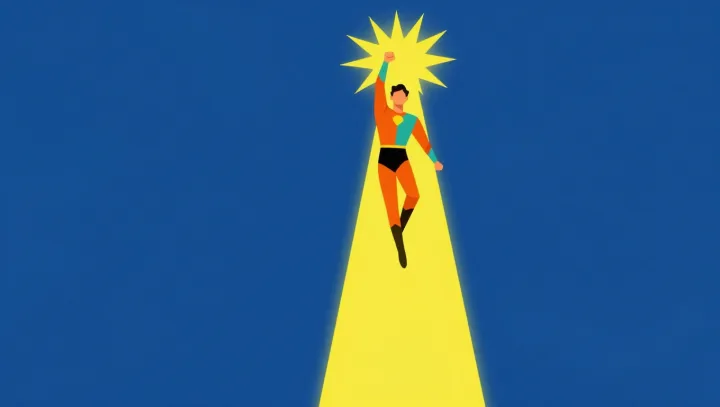
Costumes often get closer to the truth than kitchen‑sink cinema. A family crisis framed by super strength or telepathy looks ridiculous on paper, yet on screen it isolates the raw unit of conflict: loyalty versus autonomy, safety versus desire, parent versus child. By exaggerating power, the story strips away the quieter social variables that usually blur responsibility, leaving viewers to watch recognisable emotional physics play out with almost laboratory clarity.
More honest, too, are the constraints. Genre structure works like contract law: a character who can fly still cannot escape consequence. Spectacle becomes a stress test. A missed recital becomes a city in danger, a divorce becomes the shattering of an actual universe. The emotional equation is the same, only scaled up so the stakes are visible in concrete action rather than buried in sighs and glances. Viewers read the explosions as diagrams of attachment theory, not as empty noise.
The strangest advantage lies in the lie. Because every power is openly impossible, audiences drop their usual realism checklist and focus on behavioural logic instead. Does this parent apologise? Does this sibling forgive? The cape is a decoy; the script must earn belief through consistent psychology, not plausible physics. Many so‑called serious dramas chase surface authenticity, but the superhero household, freed from that burden, is forced into something harsher: emotional proof.