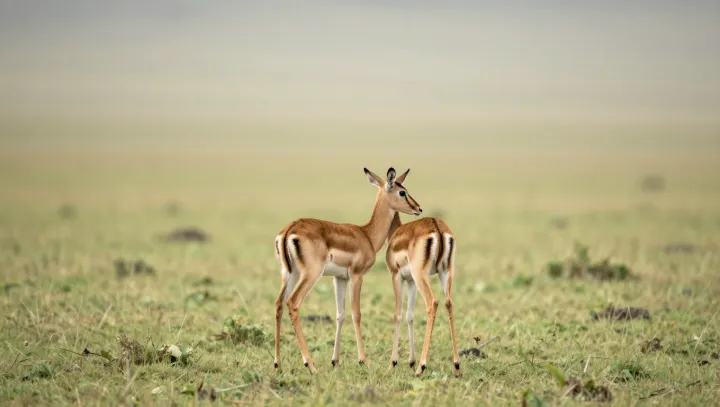
Two deer standing alone in a field are not casual neighbors; they are almost always bound by blood or breeding. In many species of deer, social structure is sharply split by sex and age, shaped by predation risk and the energy costs of carrying antlers. Females and their young form the stable core, keeping group sizes flexible so they can balance vigilance with access to food.
Most often, that quiet pair is a mother with her fawn. She invests heavily in lactation and thermoregulation, so she keeps the unit small, mobile, and easy to hide in cover. The fawn relies on cryptic coloration and a low heart rate response known as tonic immobility, while the mother does the scanning, using wide visual fields and acute hearing to detect threats long before they close the distance.
Yet the real surprise is how many mature males are missing from that picture. Once they reach full body mass and carry large antlers, they face higher energetic demands and a different risk profile, so they often adopt a solitary strategy on the edge of female groups. By staying peripheral, they reduce direct competition, monitor estrus timing through scent, and move between clusters as temporary visitors rather than permanent members of any herd.