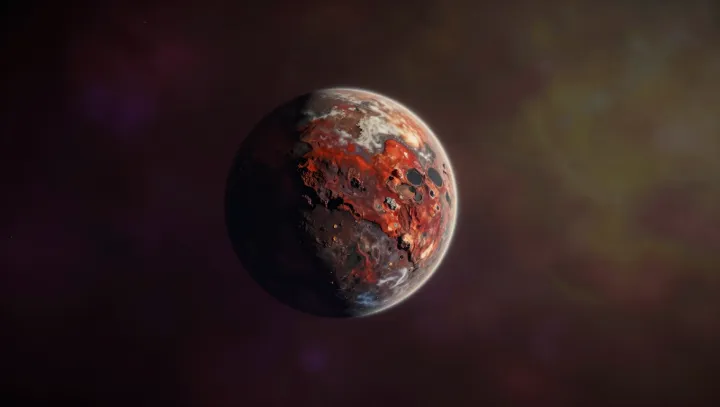
A planet richer than all human money is not magic; it is a bookkeeping trick in physics and markets. The cash pile on Earth is tiny in mass, so the bar is low in grams. Global narrow money, converted to gold at current prices, weighs less than a modest mountain of ore.
The harder claim is chemical. Real planetary formation fights concentrated treasure. During differentiation, iron and siderophile elements sink toward the core, and lighter silicates float outward, so most platinum‑group metals hide deep below any reachable crust. To flip that script, a world would need an abnormal birth, such as forming from metal‑rich debris of a shattered stellar core or a handful of unusually dense planetesimals that never fully melted.
The bold scenario is metallic, not gemlike. Pack the upper few kilometers with a percent‑level mix of platinum, iridium and gold, then add a seasoning of rare‑earth elements, and each cubic meter becomes worth more than entire national budgets at current spot prices. Thermodynamics does not forbid this; nucleosynthesis and gravitational sorting merely make it statistically rare. The limiting factor is not physics but price collapse, because once such a crust exists and is mined, those metals stop being precious at all.