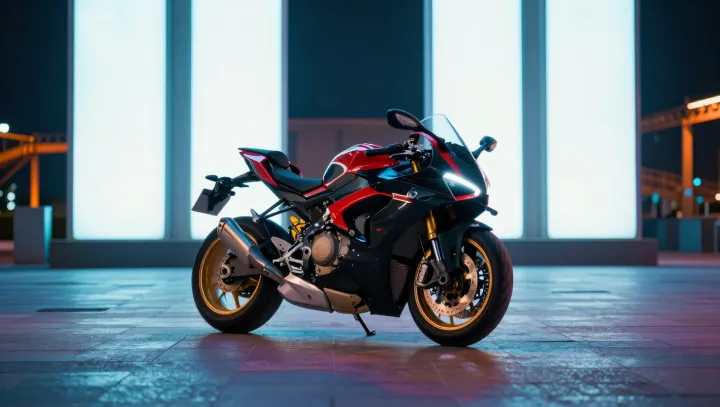
Raw power is overrated when the stopwatch starts. A liter-class sport bike often pairs roughly 150 kilowatts with a mass barely above 200 kilograms, creating a power-to-weight ratio that would embarrass many exotic cars while demanding far less absolute output from the engine.
The real trick is how that power reaches the ground. With a long wheelbase, stiff chassis and sticky rear tire, a modern motorcycle can sit right on the edge of a wheelie, where the center of mass hovers over the contact patch and nearly all weight transfers to the driven wheel, maximizing static friction while avoiding useless front-wheel lift that would waste thrust and time.
Electronics seal the deal. Launch control, traction control and anti-wheelie systems constantly sample wheel-speed sensors and engine rpm, then modulate ignition timing and throttle-by-wire openings so the tire spins just below the limit and the front wheel skims the air, allowing full-throttle launches that even skilled riders could not repeat consistently.
Gearing finishes the argument. Short first and second ratios, combined with high engine redlines, multiply torque at the rear wheel far more aggressively than the taller gearing of many supercars, which must protect clutches, driveshafts and differentials designed for heavier bodies and higher continuous loads.