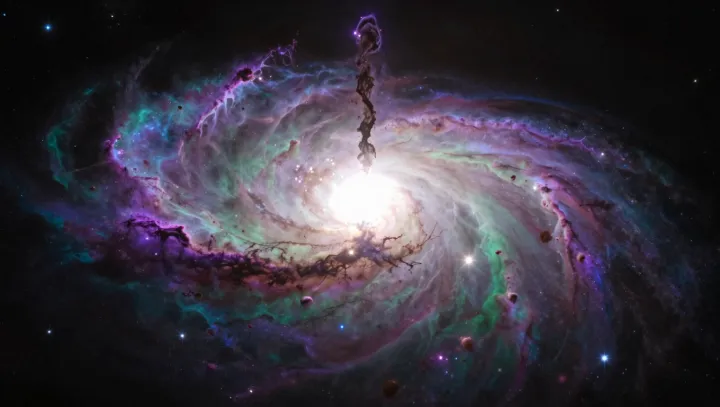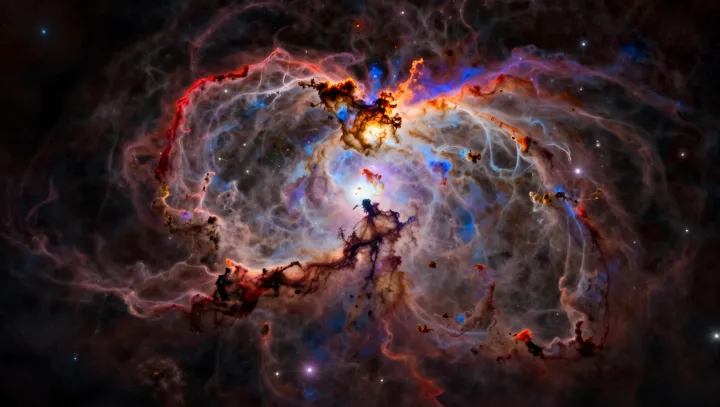
Most so‑called Milky Way photographs are closer to scientific instruments than souvenirs. What looks like a single view is often a composite built from dozens or hundreds of long‑exposure frames, each captured as a digital sensor quietly integrates photons far below the threshold of human retinal response and far beyond what a quick shutter press could register on its own.
The logic is blunt: a naked eye, limited by photoreceptor chemistry, saturates fast and misses faint hydrogen emission, while a cooled CCD or CMOS array can stack exposures, reject noise via sigma‑clipping, and stretch signal with aggressive dynamic‑range mapping. Color is rarely “true.” Filters isolate bands such as H‑alpha and O‑III; software then remaps those narrow emission lines into visually distinct hues, encoding spectroscopic information into an image that feels natural but is in fact a dense visualization of astrophysical data.
What viewers read as a single sky is usually a mosaic. Wide Milky Way arches often stitch overlapping fields, corrected for lens distortion and projected onto a virtual sphere so the galactic plane appears smooth. The result is not a lie; it is an amplified truth, compressing long integration times, selective wavelengths, and geometric warping into one frame the human visual system could never assemble unaided.