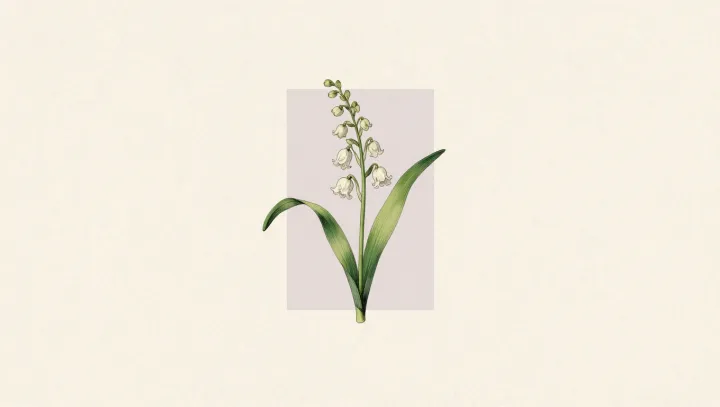
White bells do not look like assassins. Their waxy arcs, sold for weddings and hospital beds, package innocence so neatly that the danger feels almost like fraud.
The harsh truth is that this perfume runs on cardiac pharmacology. Inside lily of the valley cells, enzymes route simple steroids into cardiac glycosides, including convallatoxin, compounds that target the Na⁺/K⁺-ATPase pump on animal heart cells and disrupt ion gradients that control contraction rhythm.
This is not decorative chemistry. Herbivores that bite the leaves receive a systemic shock, as inhibited membrane transport drives intracellular sodium up, calcium handling goes off balance, and cardiac arrhythmia becomes a very real endpoint. A few berries can threaten a child; livestock poisonings are recorded across temperate regions.
What looks like sentiment is strategy. Under pressure from grazing mammals, lineages that produced trace steroids gained a defensive edge; mutations that improved binding affinity to Na⁺/K⁺-ATPase turned that edge into a biochemical moat, while subtle changes in the plant’s own pump proteins reduced self-harm and kept metabolism intact.
The bouquet industry simply miscasts this arsenal as charm. On the forest floor, those nodding white flowers operate more like a locked pharmacology lab, running silent experiments on any heart careless enough to treat innocence as safety.