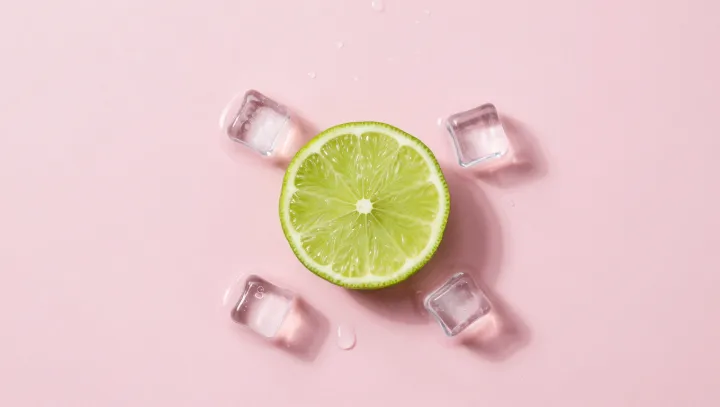
A slice of lime does not behave like garnish; it acts like a chemical editor. Across your tongue, acidic juice floods the surface, bathing taste buds in protons that quietly rewrite how incoming signals are encoded and sent to the brain.
The key claim is simple: lime does not add sweetness, it upgrades access to it. Citric acid and other organic acids donate protons that shift pH around taste pores, changing the ion channel behavior of sweet receptors and of the signal amplifier TRPM5. When pH drops, TRPM5 conductance rises; that boosts depolarization in taste receptor cells responding to sugars already present in the drink. Same sucrose concentration, higher firing rate in gustatory neurons, stronger sweet percept.
Equally important is what lime subtracts. Its volatile terpenes and aldehydes scrub away lingering bitterness and metallic off-notes through mixture suppression in olfactory and taste pathways, so background noise falls while the sweet signal remains. Sourness itself sharpens contrast: by activating distinct receptor populations, it resets baseline activity in the chorda tympani nerve, so subsequent sips feel cleaner, colder, more defined. One thin wheel of fruit, no extra sugar, yet a measurable shift in receptor kinetics and neural coding.