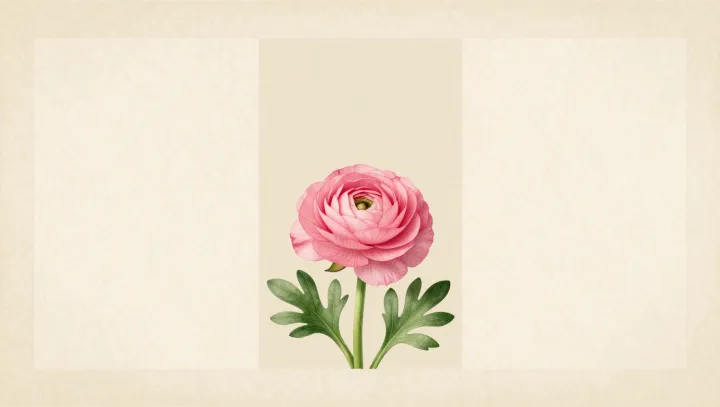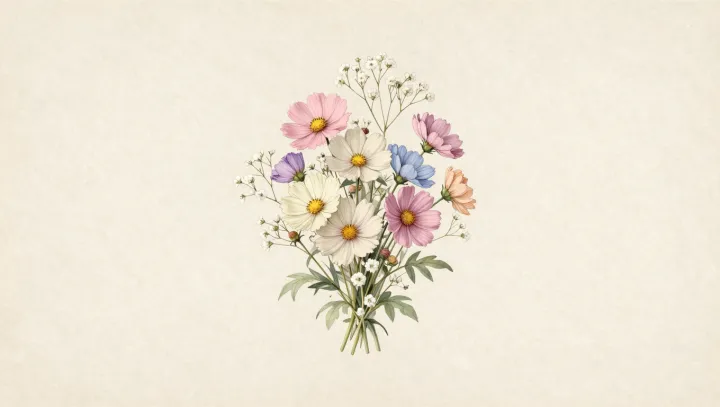
Pastel flower sketches look shy only on the surface; chemically, many use the same pigment families that push real petals toward visual overload. The trick is not in the molecule, but in how that molecule is deployed inside paper, binder and light. Softness is engineered, not inherent.
Key is dilution. In a petal, pigment granules sit densely inside cells, so the absorption spectrum bites hard into incoming light and the remaining wavelengths hit the eye as saturated color. On paper, the same organic chromophores are thinned by chalk, inert fillers and transparent binder, lowering optical density and flattening the spectral contrast that would otherwise scream.
Structure does even more work than chemistry. Petals use microstructured epidermal cells that act as tiny lenses, funneling photons back into pigment and boosting effective absorbance, a built‑in optical amplifier. A sheet of cellulose fibers instead scatters light in all directions, mixing reflected white with the pigment signal through diffuse reflection, which desaturates hues and pushes them toward that powdery, pastel register.
The human eye finishes the job. Against a bright paper ground, simultaneous contrast and the limited dynamic range of cone responses compress differences between nearby wavelengths, so once‑intense anthocyanins or carotenoids register as whisper rather than shout. What looks gentle, then, is less a different chemistry than a different stage, lighting and audience constraint.