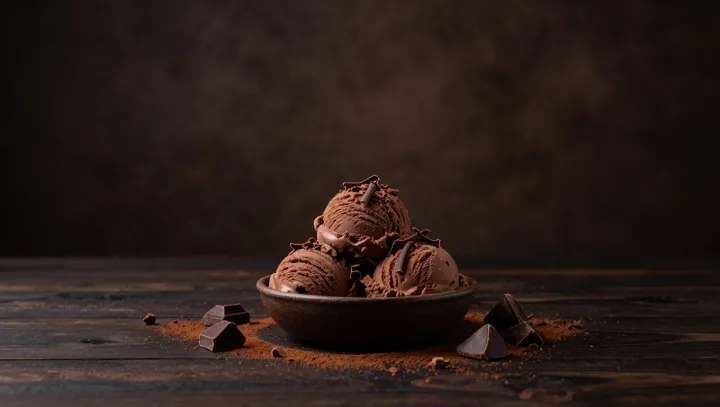
Cocoa does not just deepen taste; it rewires how cold feels. In dark-chocolate ice cream, the same dense network of cocoa solids and polyphenols that sharpens bitterness also alters the dessert’s physical structure, changing how fast ice crystals and fat droplets give up their heat to your tongue.
The bold claim is this: richer chocolate makes colder ice cream. Cocoa powder adds fine particles and hydrophobic polyphenols that bind water and disturb lactose and sucrose solutions, so the frozen mix forms smaller ice crystals and a tighter fat matrix. That microstructure slows heat transfer and melting at the surface, yet it also keeps more air and colder regions intact long enough to trigger more intense activation of cold-sensitive TRPM8 receptors in oral nerve endings.
The paradox is that a slower melt can feel sharper. As cocoa butter and milk fat form a more stable emulsion, the glass transition of the frozen phase shifts, so fewer coarse crystals scrape the tongue while a thinner, colder film of partially melted mix spreads over a larger area. That extended contact keeps evaporative cooling and endothermic phase change going at the interface, so the product seems to stay firm in the bowl while the tongue registers a prolonged, almost needle-like chill paired with concentrated bitter and roasted notes.