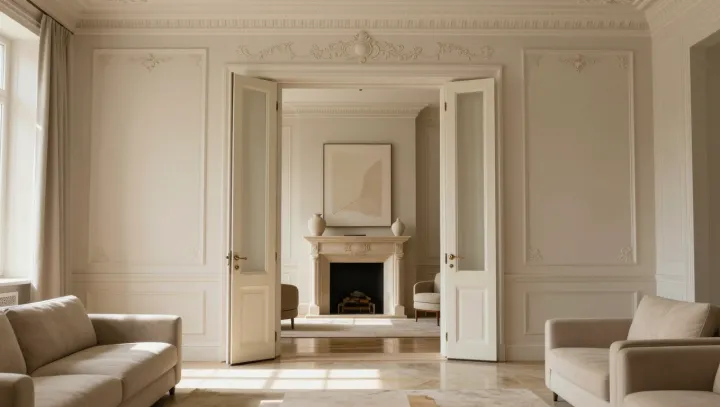
Light, not square footage, sets the real perimeter of a room in your head. When bright white walls bounce harsh ceiling light, the brain receives sharp contrast edges and intense luminance gradients that pull attention to boundaries, so the enclosure feels tightly drawn and almost diagrammatic.
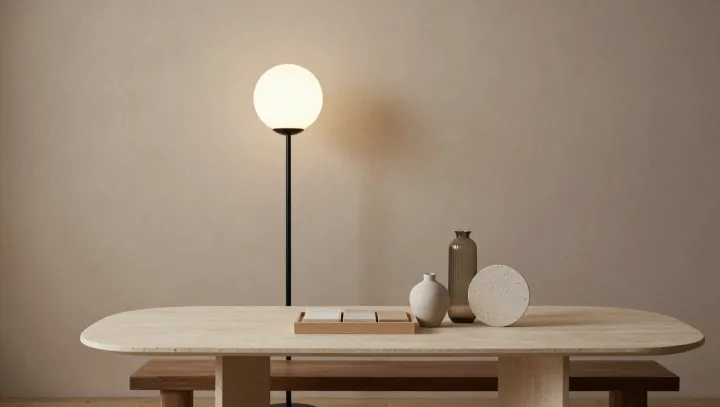
Counterintuitively, switching to warm neutrals and soft, low-level lamps increases the sense of volume. By lowering overall contrast, the visual cortex relies more on global depth cues such as atmospheric perspective and reduced edge definition, so corners blur slightly and walls seem to sit farther away, a classic figure–ground shift in everyday architecture.
The effect is partly biological. Rod and cone adaptation in the retina responds differently to glare from overhead fixtures than to diffuse, lateral light, and that change alters perceived brightness gradients across surfaces, which psychologists call spatial luminance mapping. When those gradients soften, the brain underestimates how quickly light falls off, extending the apparent envelope of space.
Warm neutrals add another quiet trick. Because they sit closer to typical skin tones and natural materials, they reduce visual noise and free working memory from constant micro-adjustments, letting attention float across the whole room instead of snagging on high-contrast edges, so the same walls feel less like limits and more like background air.