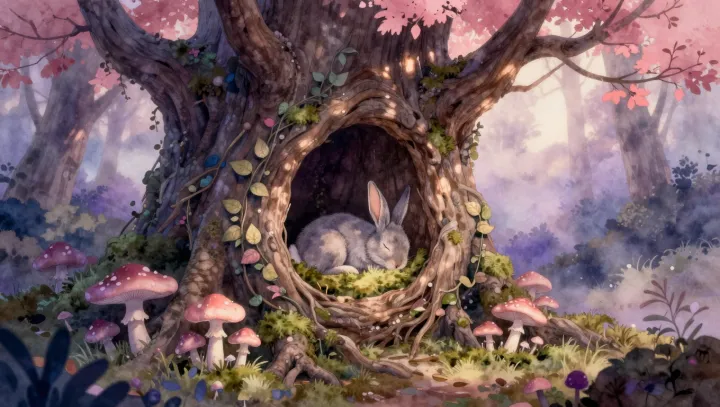
A quiet rabbit in a hollow often outperforms fireworks in your memory. Calm scenes keep the brain off high alert, so attention can idle on texture, color, and position long enough for stable encoding. In this low-threat setting, the hippocampus coordinates pattern separation and synaptic consolidation instead of scrambling to triage incoming signals.
High drama gets punished. When fireworks roar, the amygdala flags potential danger, stress hormones surge, and attentional resources narrow toward rapid threat detection rather than nuanced detail. Neurons in sensory cortex fire hard yet briefly; the hippocampus runs on a shorter leash, biased toward coarse, survival-grade snapshots instead of rich episodic traces with background sounds or faint smells.
So the softer scene wins by endurance, not intensity. The rabbit barely moves, giving sustained fixation and repeated sampling of the same visual features, which supports long-term potentiation at hippocampal synapses. Fireworks feel unforgettable, yet their neural record is often thin: a loud blur, rapidly tagged, quickly stored, and just as quickly overwritten by the next perceived emergency.