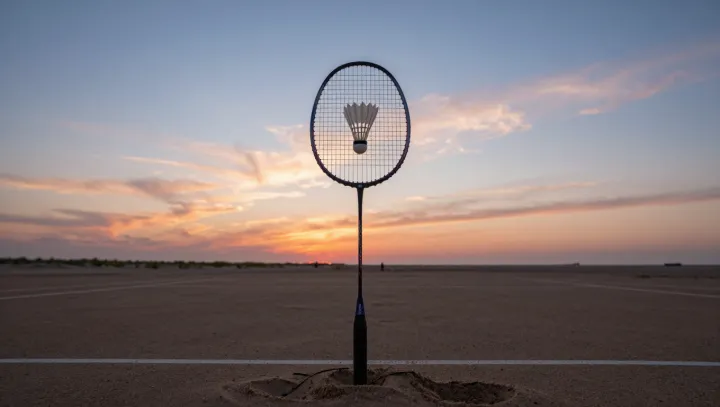
No ball in mainstream sport brakes like a shuttlecock. A smash can exit the strings above 400 km/h, yet the projectile loses most of that speed within a few meters and soon drifts almost lazily above the net. That apparent contradiction is engineered, not accidental, and it turns the shuttle into a built‑in air brake.
The key is drag, not power. With a mass around 5 grams and a wide feather skirt, the shuttle offers a huge cross‑section for air resistance compared with its weight, driving a drag coefficient far higher than that of smooth spheres. Fluid‑dynamics staples such as Reynolds number and turbulent wake formation do the heavy lifting here, multiplying the resisting force as speed rises and forcing a rapid drop from triple‑digit velocities toward terminal velocity.
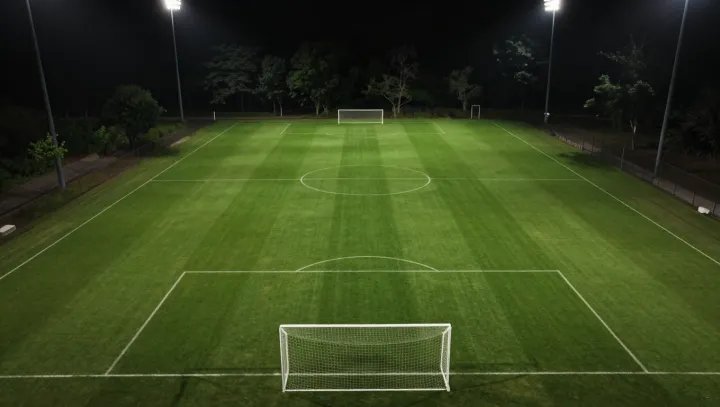
This is design as strategy. The cork nose always faces forward because the feather cone self‑stabilizes, acting like a weather vane and keeping the center of pressure behind the center of mass. That stability means players can swing hard without sending the shuttle long, since exponential drag growth clips the flight and pulls it down into the court. Tennis balls and soccer balls, with lower drag and higher mass, simply cannot shed momentum this aggressively, which is why badminton owns the fastest start and one of the softest landings in sport.