Those blank concrete plazas were never neutral; they became accidental studios the moment a board rolled in. Born in empty backyard pools, skateboarding first treated suburbia as raw topography, translating curved walls and coping into a kind of informal physics lab for speed, traction and centrifugal force.
What looks like casual loitering is actually ruthless site analysis. A handrail’s diameter, weld seams and exact millimeters of overhang decide whether a boardslide locks in or throws a rider off. The coefficient of friction of granite versus brick, the kickplate height of a staircase, even the run-up length before a set all function as hidden constraints in this unwritten design spec.
The real shift, though, is cultural, not technical. When a plaza hosts a now-famous ledge combo or a stair set becomes a benchmark gap, that footage turns the spot into common law, circulated through video parts and social feeds as if it were case precedent. Local style, trick selection and stance become signatures, so that a few square meters of stone start acting like a runway where cities advertise their attitude without a single official logo.
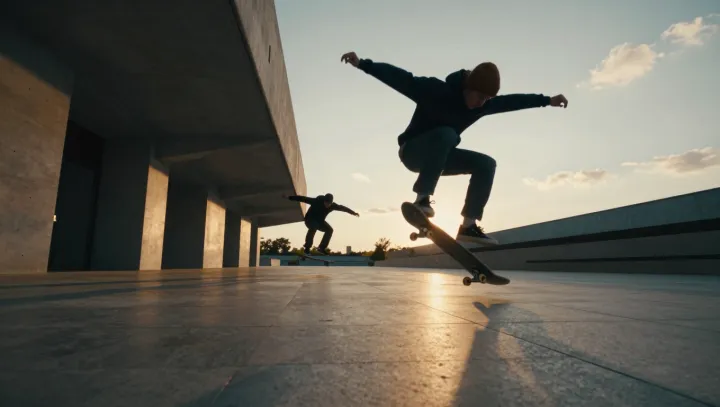
Sunset light finishes the script. Shadows stretch, edges sharpen, and suddenly only certain tricks are viable because the rider needs to read wheel position, board angle and surface cracks in a split second. In that fleeting window, anonymous municipal concrete stops being background and briefly claims authorship of how a person moves, records themselves and chooses to be seen.