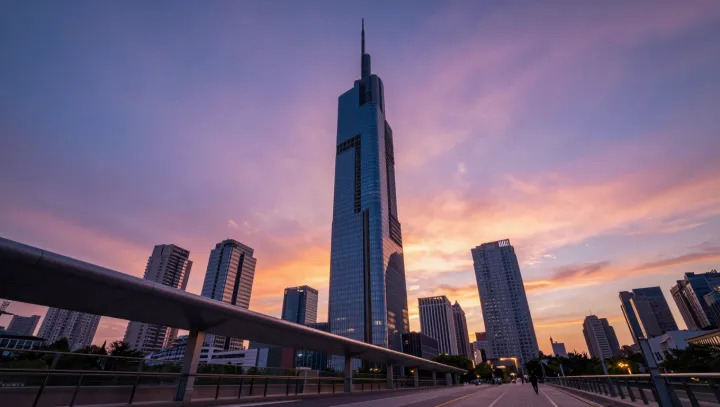
A glass tower looks like a mistake. Physics says it should cook. Yet offices stay merely stuffy, not volcanic, as the sun drops and hits those vertical panes head on.
The blunt answer is that most of that light never becomes indoor heat. Modern curtain walls use selective glazing and low‑emissivity coating to admit visible light while bouncing a large share of infrared radiation back out, a spectral gatekeeping that slashes solar heat gain coefficient compared with clear float glass. In effect, the facade behaves less like a greenhouse shell and more like a tuned optical filter that lets your eye enjoy the view while starving the building of unwanted thermal energy.
Engineers then cheat further. Behind the shiny skin sit insulated spandrel panels, thermally broken frames and argon‑filled double or triple glazing that slow conductive and convective heat transfer, so the sun‑struck surface does not instantly translate into desk‑level discomfort. Any remaining load is handed to oversized chillers and variable‑air‑volume HVAC systems, which anticipate the evening spike using building energy models and pre‑cool interior zones before the glare arrives.
What looks like reckless transparency is, in practice, a negotiated truce between optics, thermodynamics and mechanical engineering, with the sunset glow merely the visible part of a tightly controlled exchange.