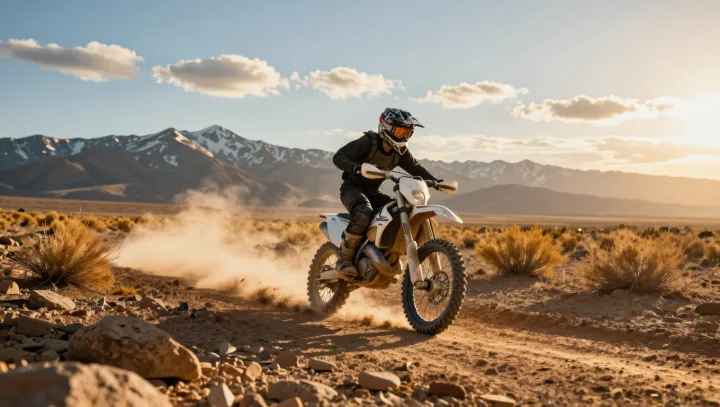
The berm gives way. In the loose arc, the bike leans not because gravity asks politely but because the turn demands an inward force while the chassis carries its mass through the curve. That is the trick. By banking, rider and machine align the resultant force nearer the tire's contact patch, reducing the overturning moment that can shove the bike upright or low-side it.
Rear slide is not failure. On yielding dirt, the rear tire can run at a slip angle, its knobs shearing the surface until lateral force and forward drive find a temporary truce; throttle then adjusts yaw, letting the front wheel hold the selected radius while the back takes a wider, drifting line. Grip is negotiated. The coefficient of friction is finite, so too much throttle overwhelms it and widens the arc, while too little lets the machine stand up and dulls its rotation. Dust keeps score. What appears reckless is a controlled bargain between cornering force, traction, and balance, written for a moment in the wake before the track erases it.
The front tire judges. It must retain enough lateral grip to answer the rear's yawing request, which is why a loose turn is managed through bar pressure, body position, and throttle rather than by merely throwing the machine sideways. That limit matters. Leaning turns instability into direction; the slide makes rotation usable, yet only while the front contact patch remains capable of carving its thin, doubtful line.