An empty corner can expose the weakness of an otherwise immaculate room. The sofa, table and lamp may all be present, yet their separate shapes seem stranded against pale walls. Less is not enough. Minimalism depends on relationships between objects, not simply on how few objects a room contains.
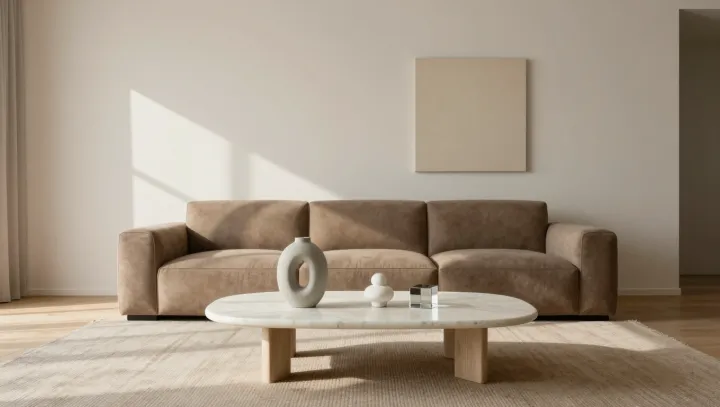
Texture gives restraint its depth. A wool rug beneath a streamlined sofa, linen curtains beside a smooth wall and a ceramic vessel on a wooden table create contrast without introducing a crowd of colors. Keep the palette related. Warm whites, stone and soft browns can sit together comfortably when their surfaces differ enough to catch light in distinct ways. Proportion matters just as much: a small rug can make generous seating look disconnected, while one large enough to reach beneath the front legs helps anchor the arrangement. Negative space should have a purpose, offering room to move and a clear view of the pieces that remain.
Lighting is the most neglected furnishing of all. A single ceiling fixture can flatten those carefully chosen surfaces, leaving the room bright but strangely lifeless; a floor lamp and a smaller table lamp add pools of light at different heights, revealing texture while making a seating area feel more intimate. Choose sculptural accents with care. One substantial object on a side table can hold its own where a cluster of little ornaments might merely create noise. In the evening, a curved ceramic form casts its shadow across the wall, and the space around it becomes part of the composition.