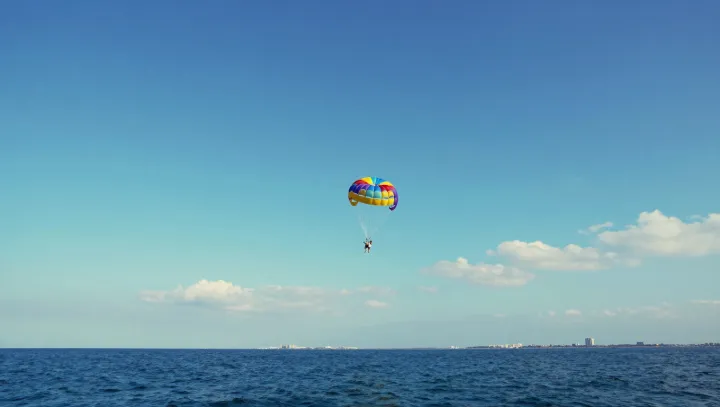
A tandem skydive can carry a lower statistical risk than the car trip to the airfield. That counterintuitive fact rests on how the entire jump is engineered as a controlled system rather than a thrill ride.
Modern tandem rigs are built around redundancy. Each container holds a main canopy, a certified reserve canopy, and an automatic activation device that uses barometric pressure and relative airspeed to deploy if the human operator fails. This triple layer sharply reduces single‑point failure risk in reliability engineering terms.
Safety starts long before exit altitude. Training pipelines standardize emergency procedures through muscle memory and situational awareness drills, borrowing from crew resource management in aviation psychology. Harness geometry, load‑bearing webbing, and force‑distribution hardware are tested against defined impact tolerances, treating every descent as a repeatable biomechanics experiment rather than a unique stunt.
Risk is then managed as a probability distribution, not a hunch. Operators track incident rates per jump, apply hazard analysis frameworks, and enforce conservative weather and equipment criteria. By compressing variables and building in margin for human error, the industry turns jumping out of an aircraft into a tightly bounded engineering problem instead of an uncontrolled fall.