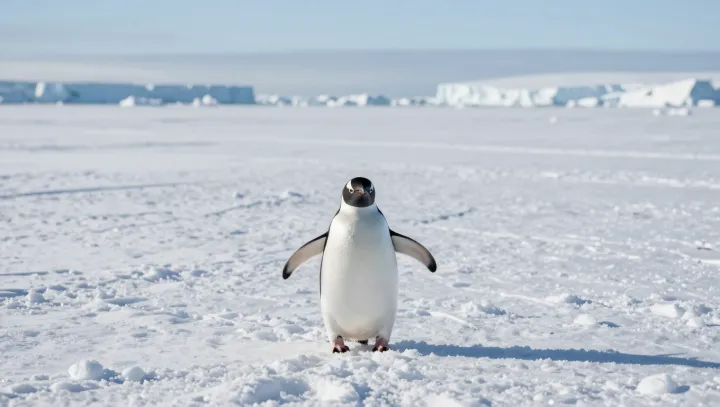
A penguin cutting through clear water is not swimming in the usual sense; it is flying in a denser fluid. Its wings have evolved into rigid flippers that trade lift in air for lift and thrust underwater, exploiting the same aerodynamic principles that keep gulls aloft, only tuned for a medium almost a thousand times denser than air.
Bone has become shortened and stiffened, joints have lost the wide range of motion needed for aerial flight, and powerful pectoral muscles now drive a compact upstroke–downstroke cycle. The result is a hydrofoil with a high lift‑to‑drag ratio, allowing each wingbeat to generate efficient thrust despite the drag penalty of water. Streamlined body contours, reduced external feathers, and tightly packed plumage minimize form drag and skin friction, while a relatively high basal metabolic rate provides the sustained energy budget needed for long, fast underwater “flights”.
Fluid‑dynamics measurements show that the vortices shed from penguin flippers resemble those around the wings of many airborne birds during cruising flight, indicating convergent solutions to the problem of moving through a fluid with minimal energy loss. Evolution has simply shifted the operating environment, but the underlying physics of lift, drag, and momentum transfer remain the same, turning an apparently flightless bird into a specialist in a different sky.