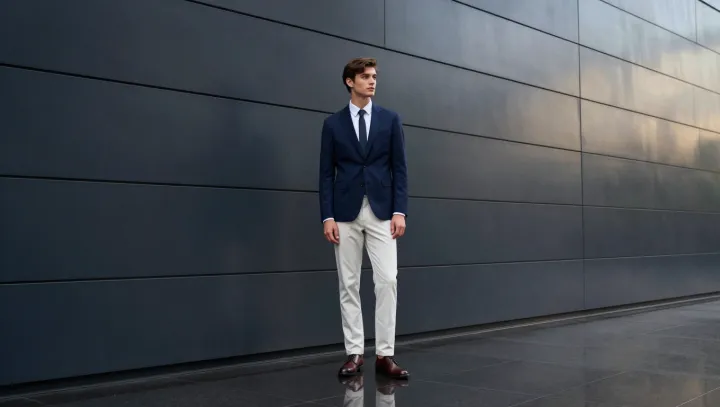
One dark suit is often more strategic than a closet full of mismatched separates. The suit acts as a constant anchor, a visual control group, while subtle shifts in shirt and tie color create daily variety that still reads as dependable. Color theory, not shopping volume, does most of the work here.
Consistency comes first. A charcoal or navy suit keeps luminance contrast low, so the eye reads the wearer as one stable shape rather than a patchwork of elements. Against that base, seven rotations emerge: white shirt with navy, burgundy or striped ties; pale blue shirt with navy, textured grey or patterned ties; and a single soft pink or lavender shirt with a sober navy tie. Each look alters hue and saturation around the face while leaving the suit as a fixed frame.
The effect is more engineered than improvised. Psychologists link high contrast and erratic patterns with perceived volatility, while controlled palettes signal reliability and role clarity. By holding fabric, cut and suit color constant and only modulating chroma at the collar line, a professional can leverage closed-loop outfit planning to reduce decision fatigue, maintain a strong visual moat and still avoid the zero-sum trap of either boring uniform or chaotic variety.