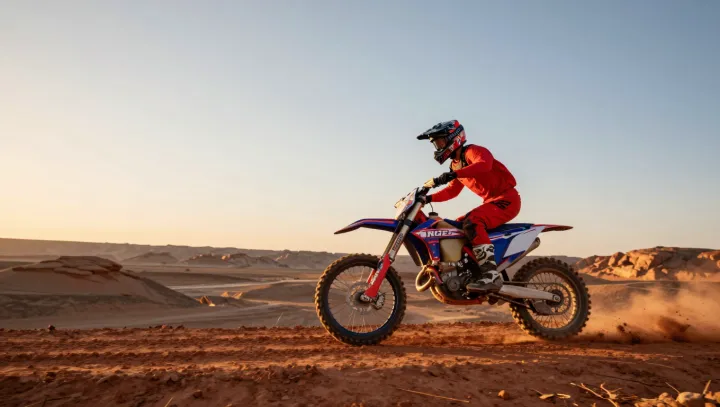
Sand, not horsepower, calls the shots when a motorcycle enters a desert. Under the front wheel, each grain behaves like a tiny bearing, and once the surface is disturbed, the top layer shears and flows, almost like a viscous fluid under load. That is why a smaller machine with predictable torque often outperforms a heavier monster that only shines on firm ground.
Heat is the real enemy. Engines, radiators, and oil systems work near their thermal limits, while high ambient temperature kills air density and quietly strips away power. Riders who ignore thermal management see vapor lock, boiling coolant, and fading brake performance long before they run out of throttle grip. Short bursts of acceleration, controlled gear selection, and respect for convective heat transfer keep the machine alive.
Tires decide whether you float or dig a grave. Low pressure increases the contact patch, spreads load, and lets the carcass deform so the bike planes on the sand like a hull on water, a process rooted in basic granular mechanics. Too much pressure, and the wheel knifes downward, creating a bow wave of sand that stalls momentum. Speed then becomes less about thrill and more about staying just high enough to keep that fragile, liquid-like surface from swallowing the bike whole.