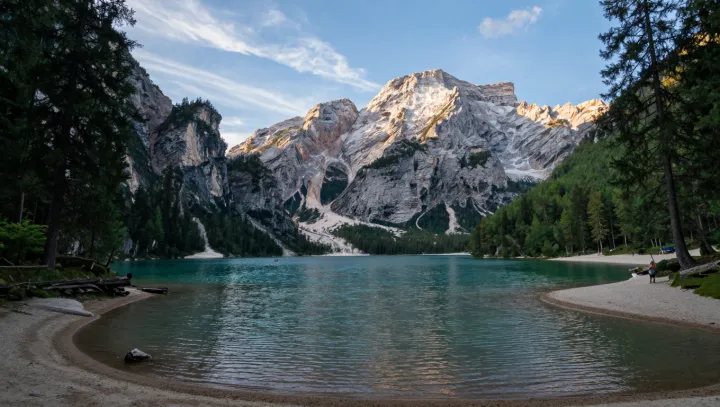
Cold water remembers. A remote alpine basin once mapped only on military charts, its surface used as a neutral corridor for silent hostage transfers, now appears not in classified files but as a pastel blur beneath handwritten fonts and heart icons.
This transformation is less romantic than it looks. First came declassification and regional marketing that framed the site as pristine rather than strategic, stripping its shoreline of barbed wire references and replacing them with folklore about healing air and storybook reflections. Then travel infrastructure arrived: a narrow road widened, a small pier reinforced, a trail graded for day‑trippers whose phones, equipped with assisted GPS and high‑dynamic‑range cameras, turned every angle into a ready‑made postcard.
Yet the real accelerant sits in code. Recommendation algorithms, tuned to engagement metrics and color‑saturation patterns, began to surface the lake whenever users paused on “fairy‑tale” imagery, while geotag clustering made the spot appear socially validated long before visitor numbers actually surged. Influencers staged boat shots that echoed propaganda stills without acknowledging the echo, and local officials quietly leveraged this visibility to justify new amenities, creating a closed-loop between online desire and physical build‑out. Somewhere under the drone paths and rented rowboats, the old negotiation routes lie, invisible, yet oddly amplified by every new pin dropped on a global map that was once off‑limits.