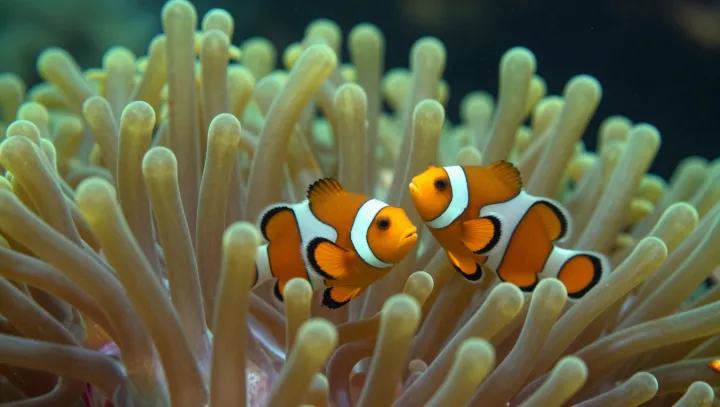
Survival here is not bravery. It is chemistry, rehearsed. A clownfish approaches a sea anemone the way a cautious diver might test unknown waters, touching tentacles for only a heartbeat before darting back, each contact a tiny wager against paralysis and suffocation.
This fish is not born immune; that myth dies quickly under a microscope. Its first encounters trigger the same nematocyst discharge that kills other species, as venom peptides aim for ion channels on nerve and muscle cells, threatening to freeze fins and gills. Yet the clownfish carries a different asset: an unusually thick, sugar‑rich mucus coat whose composition partly mimics the anemone’s own external secretions, confusing the stinging cells so they fire less intensely with every brief, repeated touch.
What looks like fearlessness is a training protocol. Short contacts allow only sublethal doses of toxins, enough to activate but not overwhelm nociceptors and the innate immune system, which adjusts receptor expression and inflammatory cascades in a process resembling local desensitization. Over many trials, altered membrane excitability and tuned antibody responses mean the same venom hits a quieter target. Eventually the fish can press fully into the tentacles, now shielded by both biochemical mimicry and conditioned tolerance, turning a lethal minefield into exclusive real estate guarded by its one‑time executioner.