One mountain punishes success more than failure. K2, lower than Everest by several hundred meters, sends roughly a quarter of its summit climbers to their deaths on the way down, a fatality ratio several times higher than its taller rival.
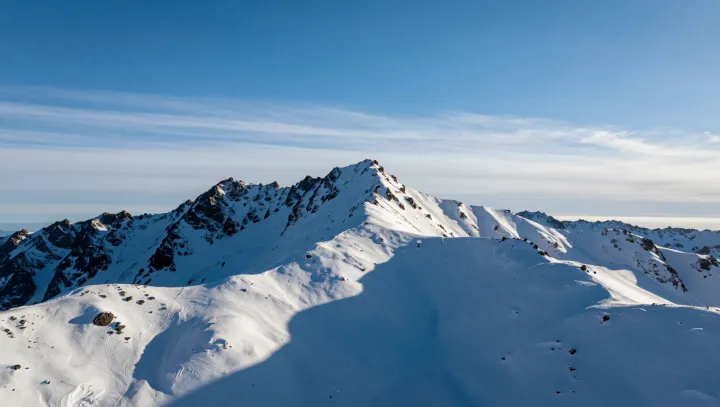
Height is a distraction; geometry is the real killer. K2 rises in a sharper pyramid, with sustained slopes that often exceed safe angles for snow stability, so avalanche risk and serac collapse stay high even in what climbers call good conditions. Sections such as the Bottleneck force teams beneath overhanging ice at extreme altitude, fixing them in a narrow fall line where one mistake, or one block of moving ice, propagates through the entire group like a chain reaction.
The descent is harsher still. Climbers leave the summit already deep into glycogen depletion and impaired by hypoxia, while the so called death zone drives cerebral edema and pulmonary edema risk. On K2 that biology meets logistics: fewer fixed ropes, less commercial support, thinner rescue capacity and more exposed traverses mean that a minor slip often converts directly into an unrecoverable fall. Weather shifts faster in the Karakoram as jet stream patterns slam into the range, and when that happens above the Bottleneck, distance to safety is measured less in vertical meters than in remaining strength.