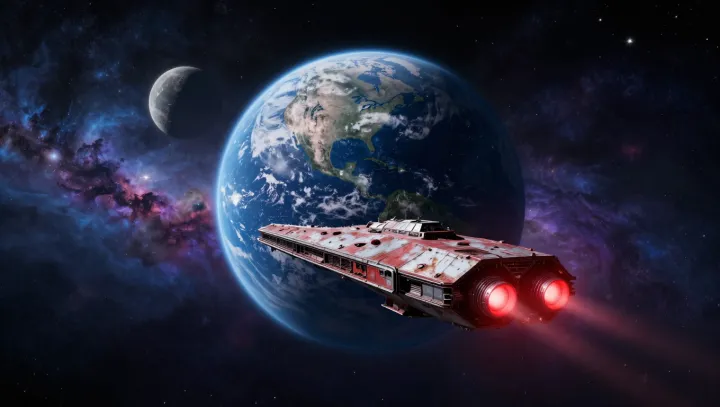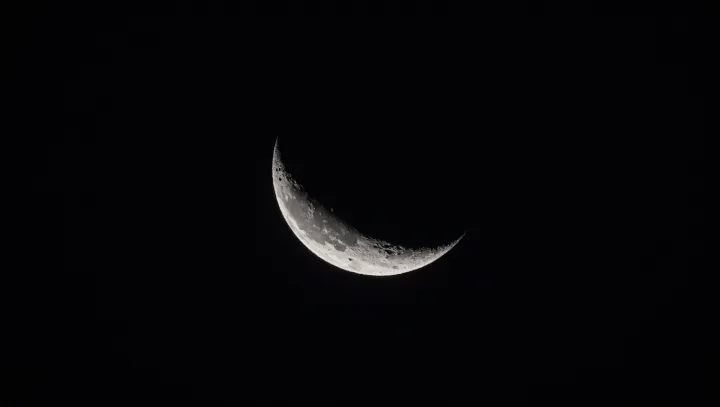
Earth looks stable only because the Moon is cheating on its behalf. Locked in gravitational torque with our planet, the Moon damps the axial tilt, or obliquity, that sets the angle between Earth’s spin axis and its orbital plane. That angle now hovers near a modest value, drifting only slightly as Milankovitch cycles modulate ice sheets and sea levels.
Absent the Moon, planetary scientists argue, that calm would fracture. Numerical integrations of rotational dynamics show Earth’s axis wandering through extreme angles, sometimes swinging far closer to the orbital plane, sometimes rearing upright. With no strong lunar moment of inertia to act as ballast, even small nudges from solar gravity and secular resonances with other planets would amplify into chaotic wobble.
The unsettling part is not abstract mechanics. It is geography made unstable. A continent sitting in temperate latitudes during one phase could, under a different obliquity, face polar darkness or near‑permanent high sun, driving radical shifts in insolation. Ice sheets could advance over basins that once hosted rainforests, then retreat as those same regions bake under tropical conditions, all without any landmass moving a kilometer.