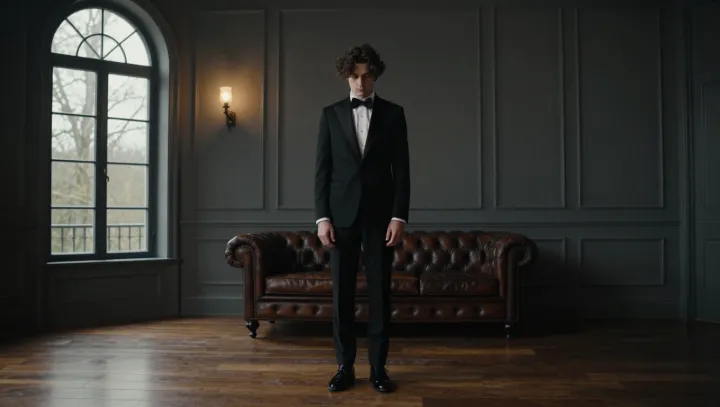
The modern suit looks simple, yet it behaves like social software running on the body. From the first dark wool coats replacing embroidered finery under candlelight, the cut migrated toward flat surfaces, sharp lapels, controlled geometry. Fabric stopped advertising ornament and started standardizing outline, stripping away decoration so that the torso became a clean screen for rank, not personality.
What seems like mere habit is in fact a compression algorithm for social information. By fixing proportions through pattern drafting and industrial grading, the suit converts wildly different bodies into near-identical rectangles, disguising flesh behind regulated shoulder width and hem lines. Tailoring evolved alongside mass production and white-collar bureaucracies, where interchangeable workers, lawyers and officials needed instant legibility without explicit insignia yet with clear distance from manual labor.
The real power of the suit lies in its ability to fuse anonymity with authority. Dark tones, notch lapels, pressed creases and a collared shirt operate as a visual protocol, something like a uniform without a badge. Police detectives, corporate executives, security agents, funeral staff and diplomats can all occupy the same silhouette, their specific role inferred only from context. The person blurs; the outline speaks.
What began as evening costume now functions as interface. One glance at the standardized jacket-trouser pair triggers learned responses about seriousness, reliability, danger or deference, much as a logo activates brand memory. Streetwear, athleisure and tech casual rise and fall, yet the suit endures, not because it is comfortable or expressive, but because no other garment compresses hierarchy, neutrality and command so efficiently into a single repeating frame.