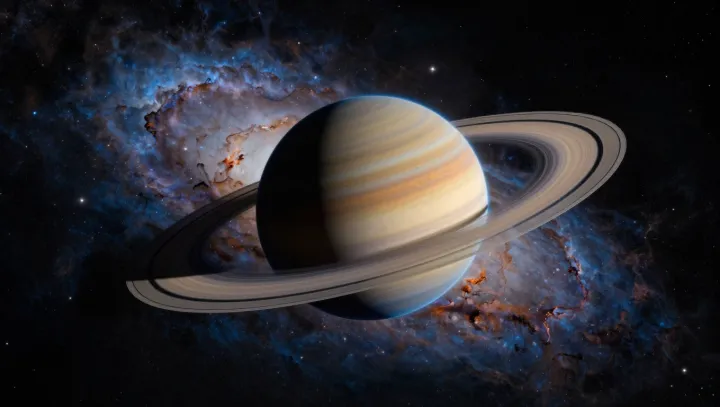
A ring around a rogue planet should look impossible, yet physics quietly disagrees. Bright structure does not belong to stars alone; it belongs to gravity, collisions, and ice. Once a ring forms in a bound orbit, Newtonian mechanics does the heavy lifting, not starlight, and orbital resonance keeps particles locked in their narrow tracks.
The key claim is simple. Darkness does not erase orbits. Ring particles follow Keplerian motion around the planet, while differential rotation and self-gravity sculpt gaps and arcs that stay intact as the whole system drifts through interstellar space. Without intense stellar radiation pressure, tiny grains are not blown away, and Poynting–Robertson drag becomes negligible, so the ring can survive for immense stretches of time.
Brightness, not survival, is the harder objection. Yet a ring does not need daylight; it needs energy and contrast. Residual internal heat and tidal heating can warm icy grains just enough that they glow in infrared radiation, and micrometeoroid impacts continually refresh clean ice on their surfaces, keeping albedo high. The surrounding interstellar medium is so dim that even modest scattered light from distant stars, plus the planet’s own faint glow, can make a dense ring stand out against almost perfect black.