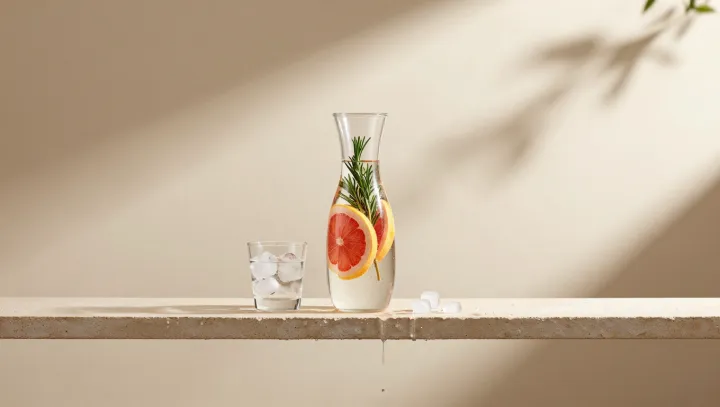
That glowing grapefruit drink is lying to your brain from the first sip. The color screams intensity, yet the real story sits in how melting ice quietly rewrites the chemistry in the glass and the signals your tongue and nose send upstairs.
Flavor, some researchers argue, is less a fixed property of liquid than a moving negotiation between concentration, temperature and human physiology. As ice melts, it lowers the activity of naringin, the glycoside that drives grapefruit’s harsh edge, by simple dilution, while the colder temperature slows the binding of that bitter stimulus to taste receptors. The result is not just weaker bitterness; it is a different pattern of receptor firing along the tongue, so the same drink now feels less punishing and more rounded.
More surprising is how the nose gets edited mid‑glass. Volatile aroma molecules, governed by Henry’s law and partition coefficients, escape less aggressively as the drink chills and dilutes, so the sharp citrus top‑notes pull back while heavier, sweeter terpenes linger. Vision still insists the drink is intense, but cross‑modal perception lets the softer smell drag perceived bitterness down with it. The ice has not only watered your cocktail. It has reshaped the story your senses tell about grapefruit.