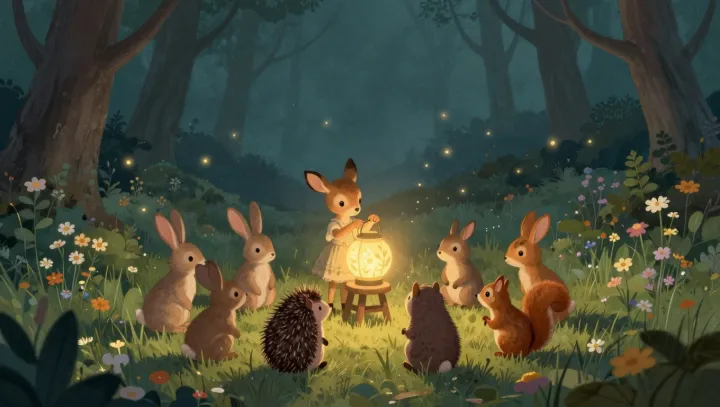
A simple lantern over still animals should be neutral, yet the brain treats it like a memory already worn in. That glow recruits the hippocampus and medial prefrontal cortex, regions that normally tag first kisses, hospital corridors, kitchen tables. Functional imaging shows these autobiographical networks light up even when scenes are obviously fictional, as long as they match familiar emotional templates.
The odd part is that the nostalgia can feel shared. Blame social circuitry. Visual scenes that imply other minds at rest, such as animals gathered under light, activate the temporoparietal junction and mirror neuron systems, which usually track other people’s intentions and gestures. Those circuits do not check passports. They simply infer quiet safety and social closeness, then feed that state into memory systems primed to label such states as “home”.
Culture cheats, too. Repeated exposure to storybook forests, animated films, and holiday ads builds a statistical prior inside the brain’s predictive coding machinery. When the eye catches warm light in darkness, higher visual areas and the default mode network do not see pixels; they predict a narrative of refuge, community, and time out of time. The result is counterfeit nostalgia that feels authentic because, neurally speaking, it is running on the very same hardware.