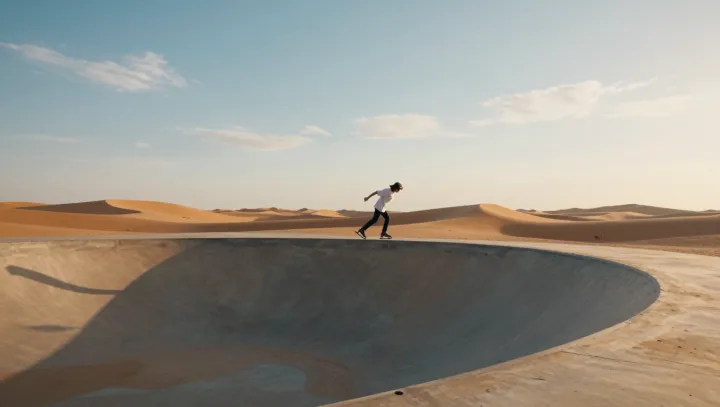
A quiet grind on steel often beats a loud slam on concrete. Along the lip of a bowl, skaters who crawl through coping grinds are not stalling their progress; they are running a hidden training program under the surface of every later trick.
The blunt truth is that slow grinders are building motor control while the send-it crowd is mostly rehearsing fear. Each patient lock-in is a lab for proprioception and center-of-mass control, two pillars of motor learning that set the ceiling for how far a skater can go. At low speed, the brain can process vestibular input, micro weight shifts and truck angle changes in real time, then update the internal model of balance with each pass. High-speed attempts off the bat flood that system with noise, so the only lesson that sticks is how hard the fall felt.
More quietly radical is how coping work rewires timing. Slow grinds force precise edge engagement, deliberate unweighting and clean exit transitions, the same kinematic chain that underpins airs and lip tricks, only stripped of spectacle. Once that chain is stable, adding speed or spin is just scaling variables, not inventing a new skill. So the kid who spent weeks inching a smith grind around the deep end often lands the first big transfer or disaster because their nervous system already knows the script; the gap only adds volume.