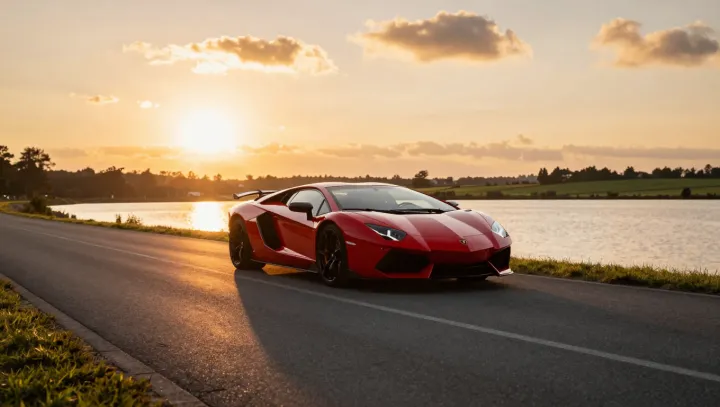
A sunset cruise is hostile territory for a supercar. Heat-soaked tarmac, thin moving air, and long climbs quietly erase the safety margins engineers fight to build into every system.
The harsh truth is simple. Cooling hates romance. At low road speed, radiators see weak ram air, so engineers oversize cores, sculpt massive intakes, and rely on high static-pressure fans while juggling drag coefficients in computational fluid dynamics. Oil coolers, intercoolers, and brake ducts share limited frontal area, so packaging becomes a three-dimensional puzzle of pressure zones and heat rejection paths, all tuned so a slow, scenic ascent does not boil coolant or cook lubricants.
Grip is even greedier. Smooth asphalt at golden hour still loads tyres like a sprint event, because heavy curb weights and high power create sustained longitudinal and lateral forces. Compound hysteresis, carcass stiffness, and camber gain are calibrated so rubber stays within a narrow temperature window despite stop‑start traffic and photo-op braking. To keep the car stable when the driver lifts suddenly for a lookout, underfloor diffusers and active aero trim drag and downforce in real time, using pressure coefficients and yaw stability data to stop a serene bend from turning into a high-speed oscillation.