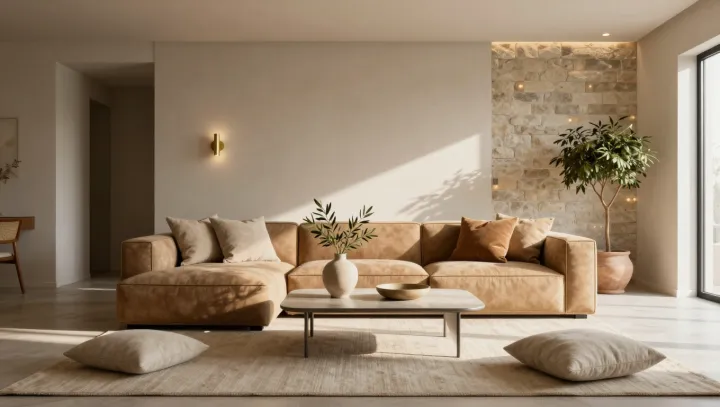
Warm light does more than flatter skin; it edits your nervous system. Swap a cold, blue‑heavy bulb for a warmer spectrum and cortisol drops while heart rate steadies, because the visual cortex receives a signal closer to firelight, which the circadian system reads as safe and low‑threat.
Richer is mostly about information density, not price. Textured fabrics scatter sound and light, creating micro‑contrasts that engage visual processing without flooding it, while also nudging down sympathetic arousal by softening echoes and high‑frequency glare that the amygdala tags as potential alarm.
Off‑white walls quietly hack expectation. Pure white spikes luminance contrast and pushes the pupillary light reflex to work harder; slightly broken tones lower that demand, so ocular muscles relax and the prefrontal cortex has more bandwidth for reward processing instead of constant sensory correction.
So the room feels expensive because the brain is no longer paying hidden physiological costs. Those warmer bulbs, nubbier weaves, and softer whites increase perceived depth and coherence, giving the hippocampus more stable cues to map, and the body translates that reduced computational load as calm, comfort, and yes, luxury.