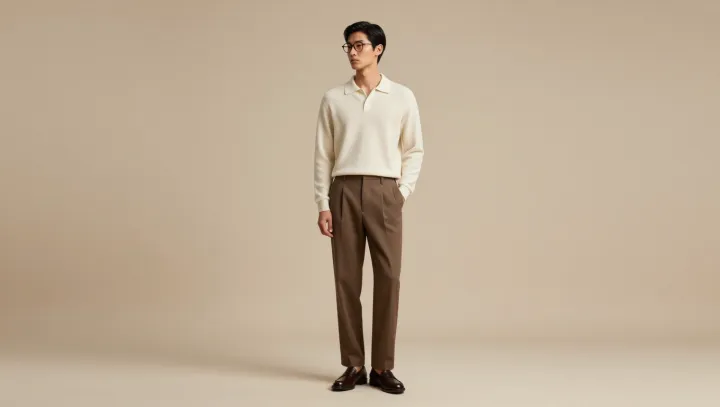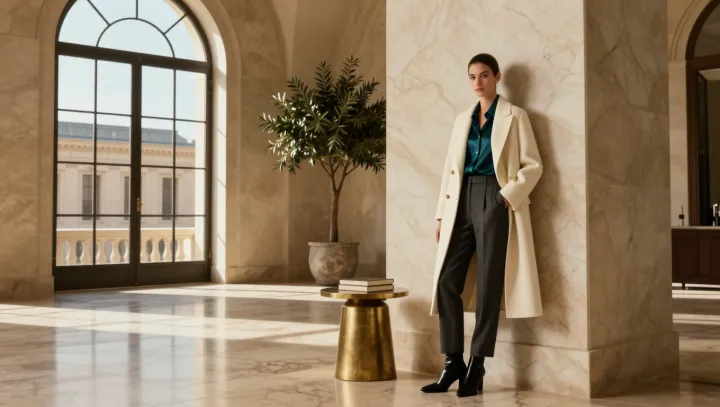
The effect is deliberate. Across a cream lapel, warm afternoon light arrives at a low angle; not ornament but geometry is doing the work, as each stitched ridge turns into a measured break between illumination and shade. The coat gains definition because its construction gives light somewhere to stop. Its middle value sustains the contrast.
Structure does the persuading. Princess seams, darts, and a pressed seam allowance interrupt a smooth surface, producing self-shadowing and ambient occlusion along the torso and sleeve. The eye reads boundaries. Those luminance gradients clarify shoulder width, waist placement, and lapel roll, while the pale cloth returns enough diffuse reflection to keep dark marks from becoming heavy blocks. That balance matters. A firm interlining keeps the contours stable as the cloth moves. On darker fabric, identical construction can look denser because shadow contrast occupies more of the visible field.
Warm light is not magic. Its lower color temperature lends cream a fuller cast, but directionality, rather than sentiment, supplies the real discipline. Cut carries the argument. When oblique rays meet raised seams, the coat's geometry becomes legible in sequence: edge, recess, plane, then edge again. The result feels leaner. Not because the wearer has changed, but because proportion has been edited by light, leaving form visible and mass discreet. At that hour, the coat seems to pin a brief strip of sun to its own architecture.