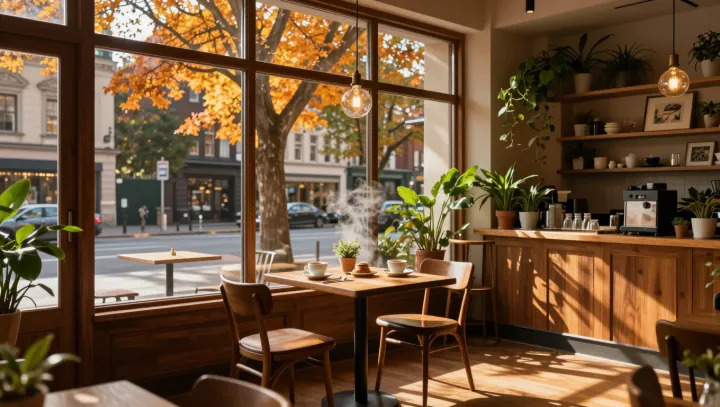
Glass earns its rent here. From floor to ceiling, the panes admit a shifting wash of daylight and frame passing coats, bicycles, umbrellas, and pauses; the room borrows motion from the pavement without surrendering shelter. Nothing stays still. A table beside the window becomes less a private perch than a front-row seat, where glances cross briefly and ordinary waiting acquires shape.
The real luxury is visual permeability. Daylight, unlike uniform electric illumination, changes in intensity and color temperature as clouds move and shadows lengthen, giving the eye both distance and detail to read. That variation may aid circadian entrainment, while daylight autonomy can reduce dependence on interior lighting during bright hours. The effect is not merely decorative. It makes a seated customer aware of weather, tempo, and the small public dramas that blank walls erase.
Privacy is overrated, up to a point. Street-facing glass turns curiosity into a quiet exchange: those inside watch the avenue, those outside glimpse a room arranged for pause, and neither side needs an introduction. Architects often treat glazing as a matter of facade performance, heat gain, and glare control; in a cafe, it is also social infrastructure. Coffee cools. Conversations taper. Beyond the pane, somebody slows, looks in, and passes on, leaving the seat occupied by an unfinished question.