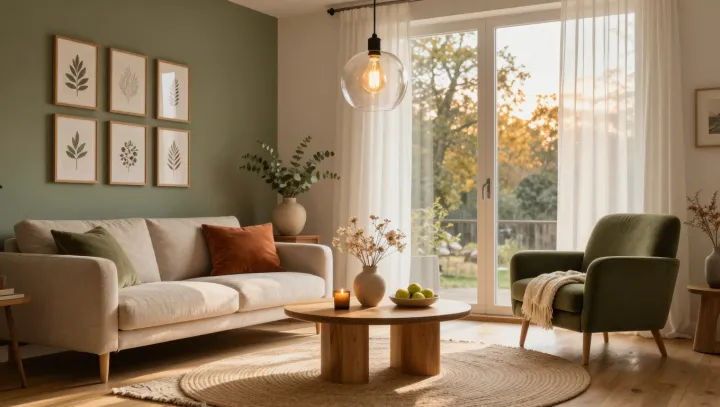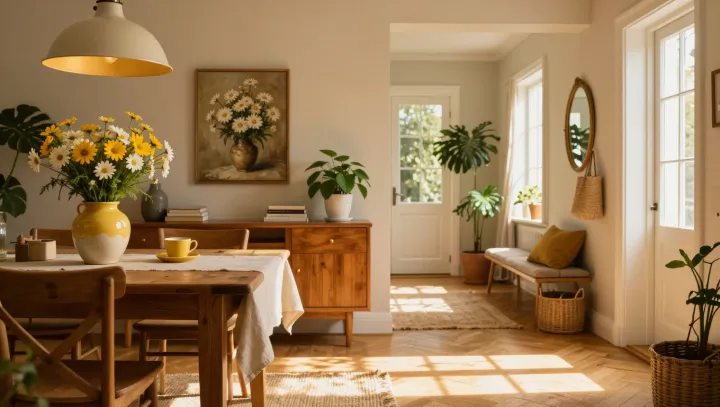
Sunlight hits the floorboards. It can make a room seem warmer than another degree on the dial, because bright, warm-toned light gives surfaces a sense of stored heat and suggests shelter rather than exposure. The thermostat stays put. That is perception at work.
Perception is not a side show; it supplies much of the room's thermal verdict. Light gets the first vote. Daylight does not warm air by its mere presence, although direct sun can add solar gain; it can alter affective appraisal, as brightness, outward views, and circadian cues shape the context in which bodily signals are judged. Interoception does the rest. That process blends skin temperature, mood, expectation, and social signals, which is why identical measured conditions can feel less severe beside a bright window than beneath dim overhead lamps.
Wood is the quieter persuader. Its grain, matte finish, and amber range borrow from learned associations with shelter and fire, even when no fire is present; the material changes the story the eyes offer the body. Flowers extend the effect. Their color and living irregularity can support biophilic design, reducing visual sterility and lending a tended room emotional ease, provided their scent does not irritate. No vase replaces heat. Yet a room inhabited by light, grain, and growth may ask less of its heating system, because comfort begins as much in interpretation as in degrees.