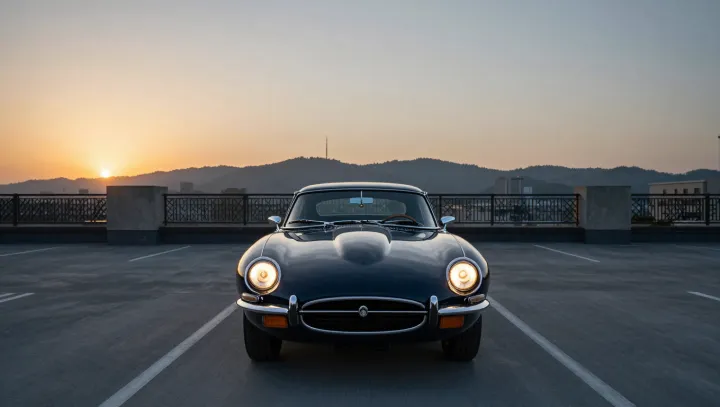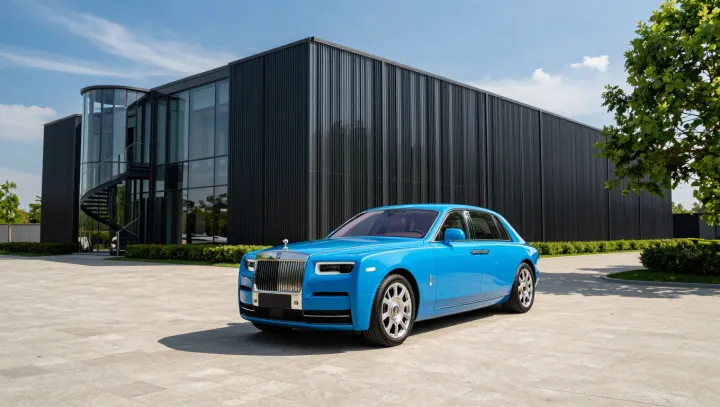
A vertical front end earns its keep before a door opens. That is the trick. Under showroom light, the grille, lamps, and high cowl form a formal wall; because the windscreen begins farther aft, the cabin seems to wait behind it, like a drawing room set beyond a portico.
This is not nostalgia; it is proportion doing social work. Size alone is blunt. Designers manipulate the dash-to-axle ratio, stretching the distance between the front wheel center and A-pillar, while a raised hood line and upright radiator aperture make that distance read as ceremony rather than empty sheet metal. The eye accepts hierarchy. A low, cab-forward profile places occupants near the visual lead, which can suggest efficiency, speed, or utility; a tall nose reverses the order, placing passengers behind an apparent forecourt. Authority follows suit. It is a reading shaped by architectural precedent, not merely by dimension.
The wager is expensive, and that is why it still persuades. Nothing comes free. A long visual hood can conflict with pedestrian-impact packaging, cooling airflow, frontal-area targets, and the demand for usable interior length, so stylists often manufacture distance through bodyside volume, hood shutlines, and a windshield base pushed rearward without simply extending the vehicle. Those moves can alter the perceived center of gravity, even when chassis proportions change very little. The result is controlled theater. The facade tells occupants they have crossed a threshold before they touch the leather. In that pause, mass becomes manners.