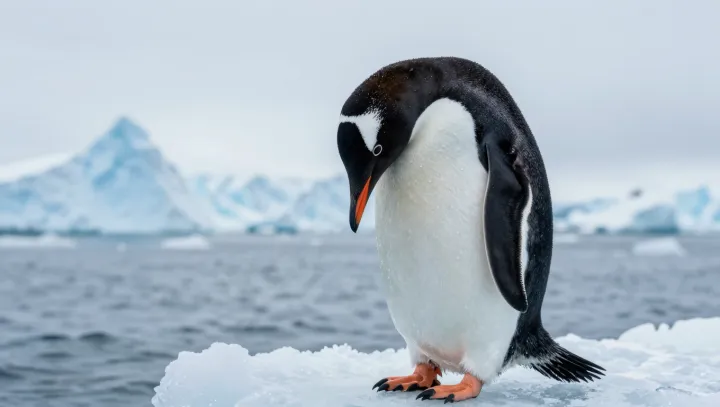
This is not vanity. Along a penguin's flanks, the beak works like a careful comb, drawing oil across feathers whose exposed surfaces must meet ice-cold water again and again without letting it reach the skin. It is preening. Neither polish nor display, it is a maintenance ritual that turns a bird's coat into a working barrier.
The gesture is serious. Oil released by the uropygial gland is spread through the plumage, where hydrophobic lipids help water bead and run off rather than soak inward, maintaining a continuous feather surface against the sea. Missed patches matter. That protection is never automatic. Feather barbs and barbules hold the surface together, so the coating does not act alone; when water penetrates the feather layer, insulation falls and the bird must burn more energy to retain body heat.
That distinction matters. A penguin is not polishing an image; it is servicing a thermal system, preserving the air trapped near its body while keeping external water at a distance during long spells in frigid water, when heat loss can turn routine exposure into a metabolic bill. The stakes stay hidden. On an icebound shore, a beak passing through feathers resembles a clerk's pen over paper, yet every stroke renegotiates the border between a warm animal and a world built to pull warmth away.