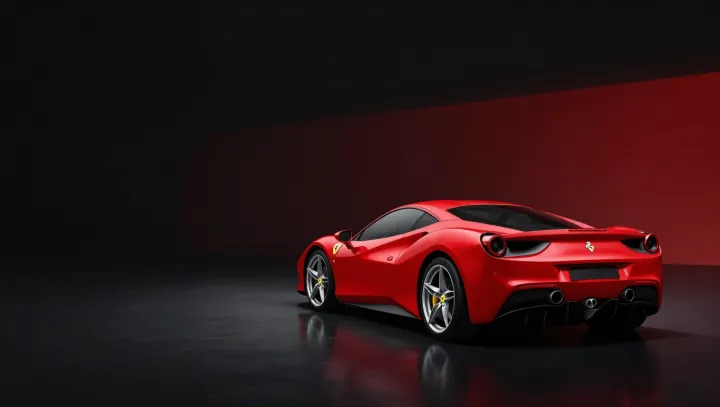
Air presses hard. Across the 911 GT3 RS, pressure fields are deliberately split and redirected: the front splitter, wheel-arch vents, underbody guides, and towering rear wing turn airflow into vertical load rather than stray drag. This is not styling. It is a road-legal body designed to keep tire contact alive when cornering forces would unsettle a conventional sports car.
The wing gives it away. Swan-neck mounts keep its underside clear, while an adjustable element and drag-reduction system alter angle according to the car's operating state; the aim is not simply more wing, but usable aerodynamic balance between front axle and rear axle. Drag can wait. A pressure differential across the airfoil, reinforced by airflow deflection and boundary-layer management, creates downforce; think of active aerodynamics as packet routing, directing an invisible stream toward the surfaces that can spend it best.
The excess matters. Porsche cites up to 860 kilograms of downforce at 285 km/h, a figure that makes suspension tuning, tire temperature, and braking stability parts of one coupled problem rather than separate chores. Grip gets negotiated. As speed rises, the car's active surfaces can trade drag for load, then release some resistance on straights, suggesting that software-controlled aero will make high-performance road cars behave less like sculpted machines and more like closed-loop flight hardware.