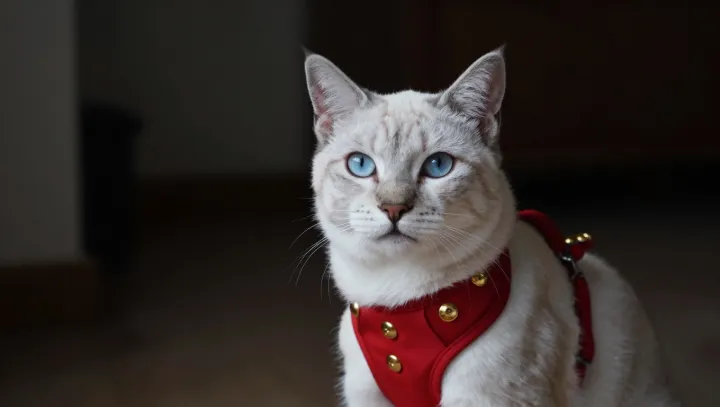
The half-closed eyelids are doing more than resting. In a cat's face, a slow blink can operate as an affiliative signal: a low-threat exchange in which relaxed lids, rather than a fixed stare, soften social pressure. It is a small wager. Behavioral studies report that cats may blink back and approach people who offer the gesture, suggesting that visual communication can carry a gentle invitation.
The habit deserves more respect than the usual sleepy stereotype. Feline social signaling is built around context, and direct eye contact can carry tension when it lingers; a measured blink interrupts that pressure without demanding contact. This is not a command. In experimental settings, cats shown slow-blink sequences displayed more slow blinking themselves and were more likely to approach an unfamiliar hand afterward. A cat may still turn away, remain still, or decline to respond when fear, pain, or noise shapes its approach behavior.
That restraint is the point. A slow blink cannot diagnose affection, and it should never override warning signs, yet its low cost makes it a sensible opening move. Look softly, close your eyes slowly, then let the animal choose whether to answer. In the pause between one pair of eyelids and another, nothing is demanded; something may be offered.