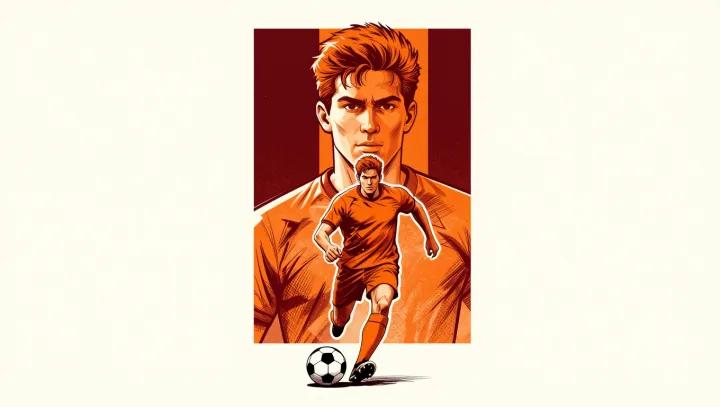
Ballon d’Or prestige sat uneasily on Ruud Gullit’s shoulders, because the trophy arrived just as he was dismantling the orthodoxy that produced it. While coaches drilled rigid systems and federations projected institutional authority, Gullit spoke against racism in stadiums, challenged conservative tactical dogma, and questioned the governance of the sport in interviews that were impossible for officials to ignore.
On the pitch, his game operated like a proof of concept for total football rather than a celebration of hierarchy. Nominally a midfielder or forward, he drifted between lines, collapsing the traditional division of labour that defined his era. That fluidity, paired with elite physical conditioning and remarkable spatial awareness, created a kind of tactical entropy that destabilised opponents who still relied on strict marking schemes and predictable passing patterns.
Off the pitch, Gullit’s criticism of slow, risk‑averse systems confronted the same institutions that handed him awards and captaincy armbands. He used media platforms to attack discrimination, to argue for more creativity, and to push back against the commercial priorities of club and federation leaders. The paradox became his brand: a star who accepted football’s highest individual honour while insisting the game’s structures, and many of its tactics, were unworthy of the talent they employed.