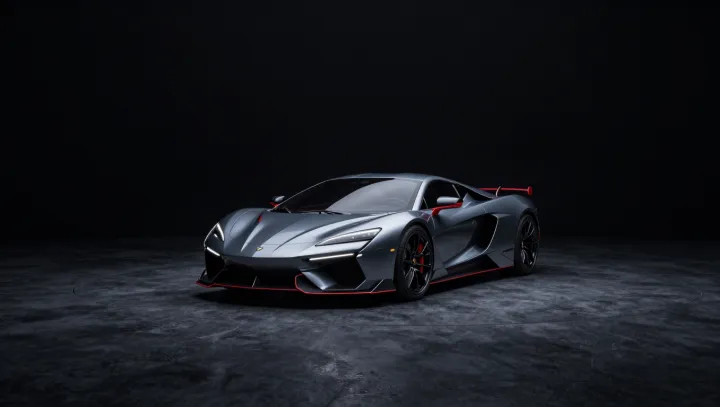
Glowing light signatures, knife-edged bodywork and sci‑fi cockpits often appear first on Peugeot’s most theatrical concepts, long before they feel remotely practical. Those prototypes are not design stunts; they are controlled experiments that let engineers probe the boundary between drag coefficient, cooling efficiency and structural packaging in a single, coherent object.
Extreme aerodynamics on these cars function as a wind‑tunnel made visible. By pushing parameters such as frontal area, pressure distribution and underbody airflow far past conventional baselines, Peugeot gathers data on turbulence, lift and noise that later informs quieter, subtler surface geometry on family hatchbacks and crossovers. The same mindset governs lighting and materials: exaggerated light blades, micro‑perforated panels and textured cladding test manufacturability, fatigue resistance and regulatory compliance before being dialed down and standardized.
Inside, the cockpit doubles as a live laboratory for human–machine interaction and cognitive load. Peugeot’s compact steering wheels, raised instrument clusters and layered head‑up displays start life on concepts as radical interface hypotheses, then move through ergonomic trials and simulator studies that track eye‑movement and reaction time. Over multiple product cycles, only the layouts that reduce mental entropy and improve information hierarchy, while still respecting safety norms, survive into volume models. What looked like spectacle on the show stand is really an iterative, high‑visibility front end to a longer process of risk‑managed innovation.