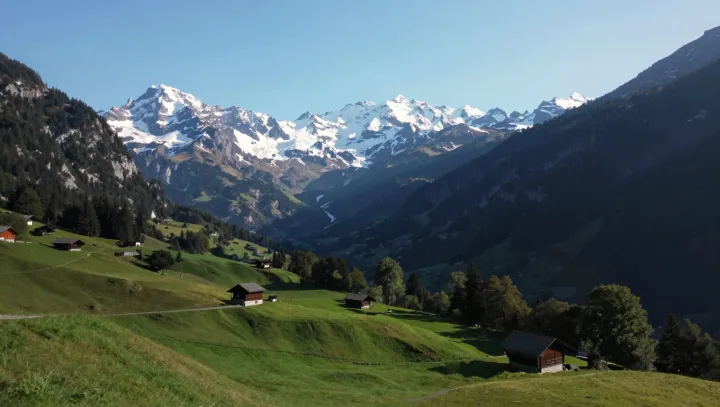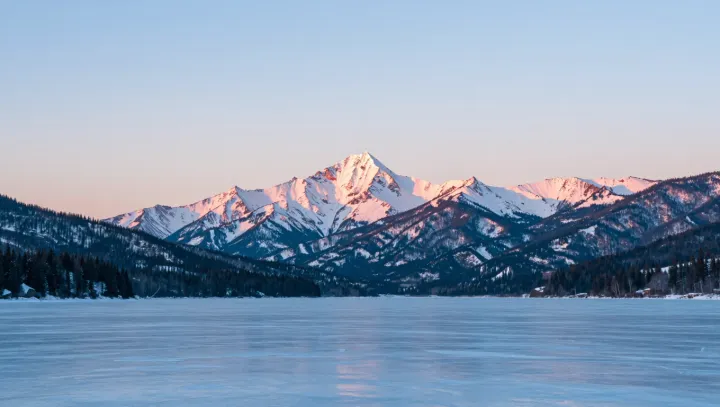
The lake sits above many clouds yet behaves less like an overflowing bathtub and more like a sealed reservoir carved into the mountains. Its high‑rimmed basin and relatively impermeable bedrock form a natural bowl, so gravity can pull water downslope only where outlets actually exist, not through the lake floor itself.
At this altitude, the hydrological cycle does the quiet accounting. Snowfall and glacier melt feed the surface, while evaporation and controlled outflow remove water. Over time, an approximate water balance, or mass conservation, emerges: inflow and outflow tend to match, stabilizing the lake level instead of letting it drain away. Because the surrounding catchment funnels meltwater into a confined depression, storage capacity scales faster than loss, allowing the lake to accumulate enough volume to rank as the largest alpine lake in Xinjiang.
Geology closes the remaining loopholes. Layers of dense bedrock and compacted sediments reduce hydraulic conductivity, the textbook term for how easily water seeps through a material. Limited fractures mean minimal groundwater leakage, so most water exits only through surface channels or evaporation. Perched high above the plains, the lake is not defying gravity; it is simply using rock structure and hydrological equilibrium as its invisible dam.