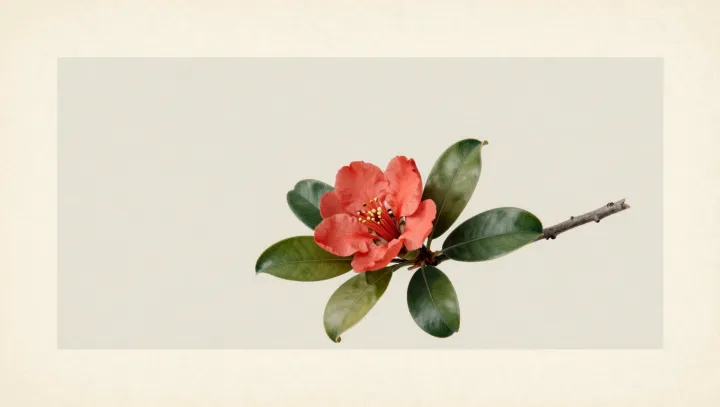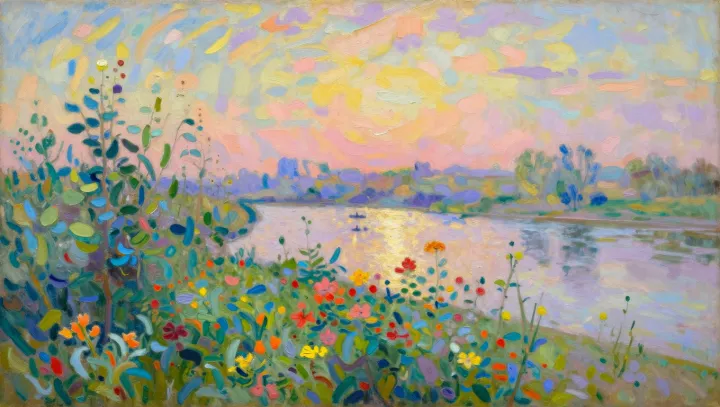
A village flower bed became a laboratory when Monet pointed his easel at it and refused to treat it as scenery. Patchy daylight, drifting cloud cover and rising humidity turned into variables, while the flowers functioned as a constant control sample that anchored his experiment in seeing.
Instead of chasing a single ideal view, Monet returned to the same plot of soil again and again, tracking how spectral distribution in natural light kept rewriting the scene. As the sun moved, the balance of short and long wavelengths shifted, and he recorded those shifts as abrupt changes in hue and value rather than as stable local color. Pigments on the canvas became tools to model color constancy and its failure, not decorations for petals and leaves.
His repeated studies of the bed approached the logic of field research: hold the geometry of the subject steady, alter only the illumination, and observe how retinal photoreceptors and cortical color processing reframe the data. In one moment, shadows read as cool violets; later, under lower contrast and scattered light, the same areas drift toward muted greens. The painting series functions almost like a visual spectrometer, translating intangible changes in daylight into legible shifts of paint that expose how unstable the colors in front of us really are.