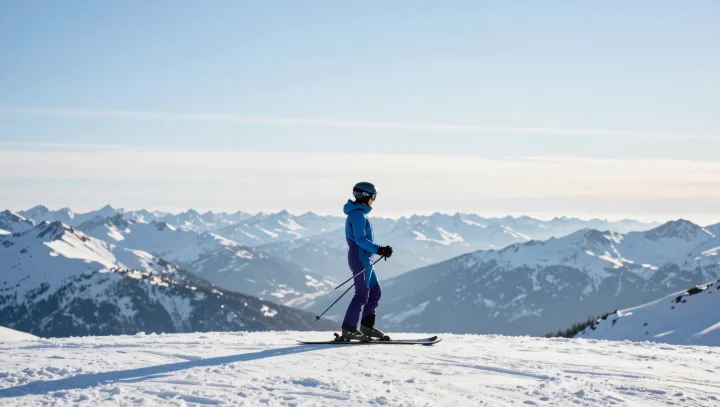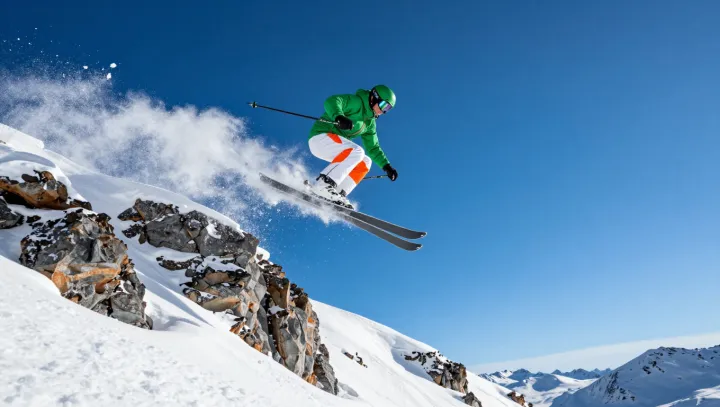
The first drop off a ski slope hits the brain like a coordinated neural storm, and that is exactly why scientists keep reaching for the word addictive. Skiing compresses velocity, risk, and complex motor control into one continuous stream of sensory data, forcing key reward and threat circuits to fire in tight synchrony.
At the core is dopamine, the neuromodulator that encodes reward prediction error and underpins habit formation. As the visual cortex tracks rushing snow and the inner ear’s vestibular system registers rapid descent, the striatum and basal ganglia integrate those signals with precise muscle commands. When a turn is carved exactly as intended, the brain experiences a spike in dopamine release along the mesolimbic pathway, reinforcing that movement pattern much like operant conditioning in a lab. Missed turns or near falls generate a sharp contrast in prediction error, which paradoxically can heighten learning and keep the behavior loop engaged.
Fear is not a side effect but a central feature. The amygdala, which computes threat salience, lights up as the body senses exposure, while the prefrontal cortex evaluates risk and exerts top‑down control. When a skier stays barely inside the boundary of control, that amygdala arousal couples with successful motor execution to produce a blended state of stress and mastery. This interaction shifts the homeostatic set point of arousal, so the brain begins to treat high‑intensity glide as a preferred baseline rather than an exception.
Unlike repetitive exercise, skiing constantly varies terrain, snow texture, and visual input, driving continuous sensorimotor adaptation and engaging procedural memory networks in the cerebellum and motor cortex. Each run becomes a new trial in a natural experiment of balance, timing, and trajectory. The brain effectively receives repeated, high‑value samples of uncertainty resolved into control, a pattern known to maximize reinforcement value under the framework of marginal utility.
Over time, contextual cues such as cold air, chairlift sounds, or the sight of a slope become conditioned stimuli, activating reward pathways even before movement begins. That anticipatory firing helps explain why the pull of skiing can feel disproportionate to its actual duration: the brain has learned to treat the entire ritual, not just the downhill seconds, as a tightly bundled source of prediction, risk, and resolved challenge.