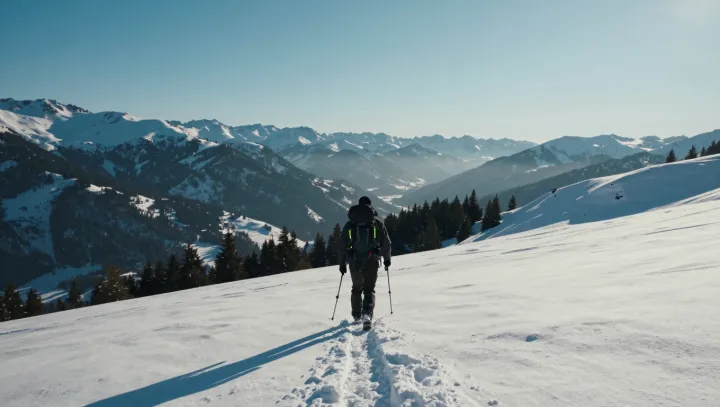
Silence on a trail often delivers more connection than noise in a crowded bar. The paradox sits inside the brain’s wiring rather than in the landscape. When social input is constant, the cortex spends most of its energy on decoding faces, tracking status signals and managing impression formation, a form of continuous social vigilance that quietly drains cognitive resources.
Alone on a path, sensory input drops and the brain shifts into the default mode network, the system linked to self-referential thinking and autobiographical memory. In parallel, interoception circuits tune in to breath, heartbeat and muscle fatigue. Instead of social comparison, attention moves to body signals and long-range reflection, which reduces perceived social threat and lowers cortisol. The result is a subjective rise in belonging, because the internal narrative feels coherent rather than fragmented by rapid-fire interactions.
Crowded settings promise connection but often trigger entropy in attention: too many stimuli, too little depth. Hikers report the opposite because solitude creates a kind of psychological closed loop where thoughts, sensations and environment align. The mind experiences that alignment as intimacy with self and world, even in the absence of conversation.