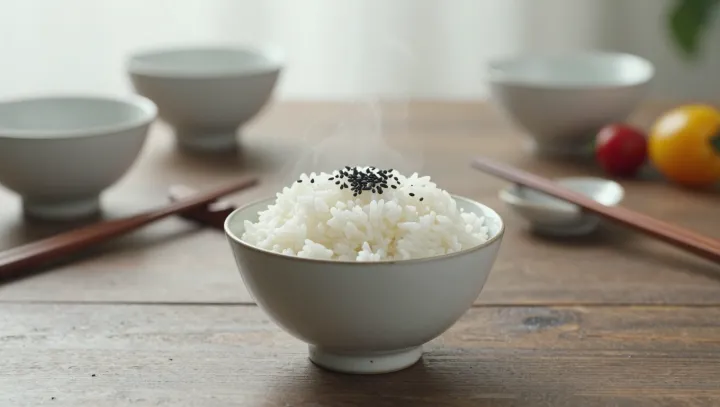
Cooling rice on the countertop does not quietly seed cancer; it creates ideal conditions for a food-poisoning bacterium. The real concern with overnight rice is not carcinogens but Bacillus cereus, a spore-forming microbe that survives boiling and then multiplies rapidly as warm, moist grains cool too slowly in the so-called danger zone for microbial growth.
Public anxiety often jumps to cancer, yet toxicology data show no unique carcinogenic compound emerging simply because rice is stored overnight. The well-documented risk is acute gastroenteritis driven by bacterial spores and their heat-stable toxins. Bacillus cereus thrives when cooked rice, rich in starch and water activity, lingers at warm temperatures before refrigeration. Once concentrations reach an infectious dose, ingestion can trigger vomiting, diarrhea and dehydration within hours.
Food-safety guidance instead focuses on time–temperature control, a principle closely tied to microbial growth kinetics and hazard analysis and critical control point (HACCP) systems. Best practice is to cool cooked rice quickly, store it in shallow containers under refrigeration, and reheat thoroughly to a safe internal temperature. These measures reduce bacterial load but do not revolve around cancer prevention, underscoring how a viral claim about overnight rice has obscured a clearer, more immediate microbial hazard.