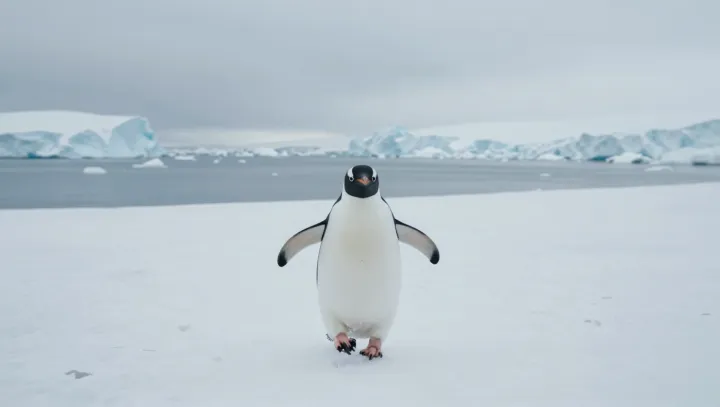
A penguin standing in Antarctic wind is not ignoring the cold; it is running a precision insulation system. Instead of high-tech fabric, its outer shell is built from densely packed feathers that overlap like roof tiles, creating a physical barrier that blocks wind and keeps icy water away from the skin.
Beneath that surface, each feather traps a layer of still air, turning the bird’s coat into a natural aerogel. This trapped air sharply reduces thermal conductivity, slowing the rate of heat loss from the warm core to the frozen air and water outside. By compressing or fluffing its plumage, the penguin actively adjusts this air layer, fine-tuning its thermoregulation much like a person venting or sealing a technical jacket.
Deeper still, a thick layer of subcutaneous fat, or blubber, adds another line of defense, acting as low-conductivity biomass that buffers the body’s internal organs. Countercurrent heat exchange in blood vessels of the flippers and feet recycles warmth instead of wasting it to the environment, lowering the energy cost of maintaining core temperature. The result is a living, multi-layer thermal architecture that functions with the efficiency of engineered cold-weather gear, without a single zipper or battery.