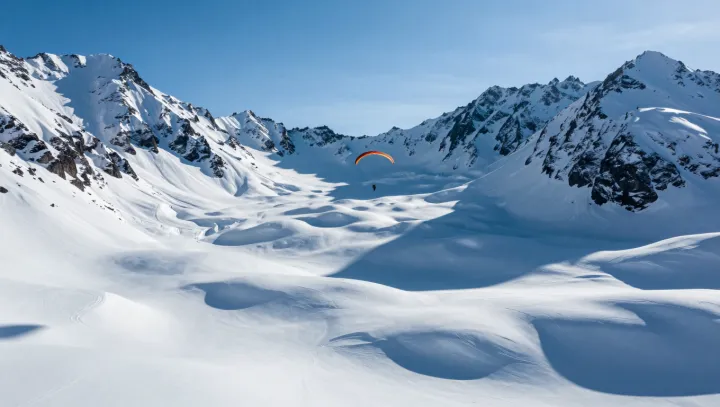
From the landing field, winter sky can look motionless, a clean blue sheet above frozen ground. In the air, the physics are less forgiving. Dense cold air, sharp temperature inversions and strong vertical wind gradients can combine into a quiet trap for paraglider wings.
Safer pilots learn that ground perception is a poor proxy for what happens in the boundary layer, the slice of atmosphere where a paraglider actually flies. Snow cover, weak sun and valley shadow can lock in a powerful inversion while an upper wind races overhead. This creates wind shear, turbulence and rotor that remain invisible until the wing meets them. Instruments such as variometers and GPS tracks show that even on visually calm days, climb rates, sink spikes and drift can fluctuate in ways that leave little margin for a flexible fabric airfoil.
Because the structural safety factor of a paraglider is small compared with rigid aircraft, and because human thermal regulation and reaction time degrade in cold, the risk curve steepens quickly when conditions are misread. Saying no becomes a deliberate risk management tool, not a mood. By repeatedly refusing borderline days, cautious pilots reduce exposure to rare but severe events like sudden gust fronts or collapse close to terrain. The habit of no preserves decision altitude, mental bandwidth and, ultimately, the option to fly again when the sky is not just beautiful from below, but actually stable where the wing will live.